A l'origine spécialisée sur les matières premières et notamment sur l'or, ETF Securities, a choisi la voie de la diversification au lendemain de la crise financière de 2008. Après avoir enregistré au premier trimestre une collecte de plus de 1,3 milliard de dollars, la société de gestion dépasse désormais les 22 milliards de dollars d'actifs. Dans un entretien à NewsManagers, Sihem Labbas, responsable France, Belgique et Luxembourg, Romandie et Monaco, fait le point sur les premiers résultats de cette stratégie et présente les priorités de la société de gestion pour cette année et les suivante
Mark Post quitte le teneur de marché IMC Trading pour prendre un poste de direction chez le gestionnaire alternatif néerlandais Done Fund Management (150 millions d’euros d’encours), rapporte le site spécialisé Fondsnieuws. L’intéressé sera chargé principalement de professionnaliser l’organisation de la société dans un contexte de croissance et de réglementation de plus en plus dense.
Paola Mungo vient de démissionner de son poste de co-administrateur délégué d’Azimut Holding au terme de 16 années passées au sein du groupe italien, annonce un communiqué. La démission prendra effet le jour de l’assemblée d’approbation des comptes 2016 prévue le 27 avril. Le communiqué précise que Paola Mungo détient 92.965 actions Azimut Holding.
Le dernier fonds immobilier opportuniste de Blackstone devrait être bouclé dans le courant du mois de juin, avec des encours d’environ 7,5 milliards d’euros, selon l’un des investisseurs potentiels dans ce fonds, rapporte le site spécialisé IPE. Blackstone Real Estate Partners Europe V a déjà levé 4,6 milliards d’euros en mars 2016 à l’occasion d’un premier closing, et ce montant ne sera pas loin d’être multiplié par deux. A l’origine, Blackstone espérait lever 7 milliards d’euros pour ce nouveau fonds.
ETF Securities, originally a specialist in commodities, and particularly gold, chose the path of diversification in the wake of the financial crisis of 2008, After posting inflows of over USD1.3bn in first quarter, the asset management firm now has over USD22bn in assets. In an interview with NewsManagers, Sihem Labbas, head for France, Belgium, Luxembourg, French-speaking Switzerland and Monaco, discusses the initial results of this strategy and the priorities for the asset management firm this year and thereafter.
BlackRock, the world’s largest asset manager, held total compensation for Chairman and Chief Executive Officer Larry Fink (co-founder of BlackRock) nearly flat in 2016, according to a filing on last Thursday. Fink was awarded USD25.5 million in compensation last year, compared with USD25.8 million in 2015, based on a calculation of his pay in line with U.S. Securities and Exchange Commission guidelines. The company’s president, Rob Kapito, was paid USD19.6 million.
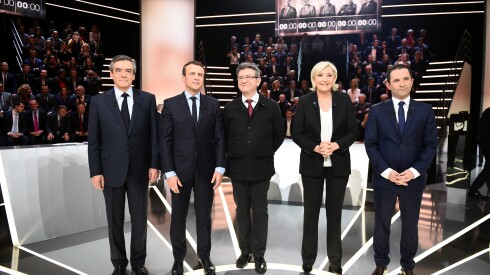
While the first round of the French presidential election will be held next Sunday, April 23, NewsManagers delivers a few comments from the large management companies on the impact that these elections could have.1: OFI AM: Jean-Marie Mercadal, deputy CEO in charge of investments (27 March)“In general, if there were not such a loaded electoral calendar, European equities would be at higher levels”- “To a potential victory for Marine Le Pen in the French elections, the reaction of the markets would come in two phases: one after the second round of the presidential elections, and before the legislative elections, a sudden shockwave would be limited by the prospect of the elections to follow. The orders of magnitude are difficult to estimate, but on the basis of what we have been able to learn from various economists, we can estimate that the spread between France and Germany may instantly widen by a range of about 200 to 300 basis points, with natural contagion to other peripheral countries. The Paris stock market may lose about 20%, and the US dollar may have double-digit gains, at least up to parity. If we are convinced that there will not be a majority afterwards in the National Assembly, it will be time to buy.But, in a second phase, if the new president is ever able to gain a legislative majority, the consequences would then be much more serious and equally instantaneous on the markets, even if the outcome of the process of exiting from the euro does not appear for several years, or never. In this case, there are no limits, and a 500 basis point spread with Germany is possible, with a drop of more than 25% on the stock markets, a rise in the value of the US dollar and gold, and consequences for all European and global markets, particularly the peripheral ones. In this scenario, savings accounts would be locked down to prevent capital from leaving them, and a liquidity crisis would affect financial assets in the country, thus also the banks...”2: JP Morgan France private bank: Vincent Izrael, head of investment team“Recent surveys show that only half of European citizens have a positive opinion of the EU, and more than one third favour more integration, but the next elections in Germany and France represent an opportunity for European directors. The cohesion of the EU following the elections will certainly be an encouraging signal to investors. … Since the climate is currently very negative, any improvement in the outlooks for the region may have a significant impact and result in investments and a rise in equity prices.”3: Syz AM: Hartwig Kos, Deputy chief investment officer, co-head of multi-asset (10 April 2017)“The fact that the anti-EU party of Geert Wilders (in the legislative elections in the Netherlands) failed to attain enough votes to take control in the Netherlands is clearly a positive event. However, the results of this vote do not make it possible to draw conclusions about the outcome of the presidential election in France. We think that it may represent an entry point to return to equities (particularly European markets), but it is still too soon to contemplate this prospect.”4: Amundi: Philippe Ithurbide, director of research and strategy (31 March 2017)“The European elections have room to surprise us. Overall the populist parties have not been able to win these elections so far, not in Spain, or in the Netherlands, or in Austria… And in france, it will very likely be similar: the Front National, which worries all investors, is topping out in the polls and is widely viewed as likely to lose to the candidate Macron. Further, Germany has never had two such strongly pro-European candidates, and this is to say nothing of the extreme right and populist parties, which are marginal at this point. The icing on the cake, or the irony of history, is that populist parties are finally not winnning the elections in Europe, but instead in the English-speaking countries: the pro-Brexit vote in the United Kingdom (excluding Scotland and Northern Ireland) and Donald Trump in the United States. It makes one think back to the times when European budget deficits of 4% or 5% were ardently criticised by representatives of countries with deficits of 10% (especially United States, United Kingdom or Japan)! … European equities will see a rebound in interest if the prospectives in the elections clear up, which we believe will occur. Many investors, particularly foreign investors, have decided to stay away in light of uncertainty related to the election. When these uncertainties are cleared up, risk premiums will be left behind that will seem excessive… and which it will be time to jump on. Don’t delay.”5: Pictet AM: Barometer for April“We will be even more optimistic (about European equities, which we are overweighting) without the prospects of the upcoming presidential elections in France. Investors appear to us to be overconfident in the results of the vote, and underestimate the possibility of a win for Marine Le Pen. Even a good result for the Front National candidate on the first round could shake the markets.”6: Fidelity: Investment convictions in second quarter on bond markets (13 April 2017)“Politics in Europe are the centre of attention again, as investors nervously evaluate the probabilities of a victory for the Front National in the French presidential election. However, in our central scenario, a victory for the candidate is unlikely to the extent that the two-round electoral system in France represents a significant obstacle for her. The ECB will continue to play an active role in the markets, limiting any repercussions from the political sphere from affecting government bonds which may compromise its mechanism of monetary transmission. We prefer to look beyond the volatility to the widening short-term spreads, and are positive about French government bond, and more generally debt from euro zone peripheral countries.”
EagleClaw Midstream Ventures and its financial sponsor, EnCap Flatrock Midstream, announced that they have entered into a binding agreement to sell the company to funds managed by Blackstone Energy Partners and Blackstone Capital Partners for approximately USD2 billion. Blackstone Energy Partners is the energy-focused private equity business of Blackstone. The all-cash transaction is expected to close by the end of July 2017 and includes approximately USD1.25 billion in stapled debt financing provided by Jefferies LLC.EagleClaw is the largest privately held midstream operator in the Permian’s Delaware Basin in West Texas, said the press release. It will retain its name and operate as a Blackstone portfolio company. The leadership team and fundamentally all of the company’s employees will remain in their current roles and are investing alongside Blackstone in this transaction.
Royal Mail plc is providing an update on its 2018 Pension Review in respect of the future of the Royal Mail Pension Plan. The member-wide consultation phase ended on 10 March 2017, said a press release. Royal Mail has reviewed the consultation feedback received from members and its unions, the Communication Workers Union (CWU) and Unite/CMA. This includes a proposal put forward by the CWU. «The Plan is currently in surplus but we expect the surplus will run out in 2018, said the company. The Company’s annual pension contributions are currently around GBP400 million. If no changes are made, the contributions could more than double to over GBP1 billion in 2018. We have concluded that there is no affordable solution to keeping the Plan open in its current form. Therefore, the Company has come to the decision that the Plan will close to future accrual on 31 March 2018, subject to Trustee approval».Royal Mail says that it continues «to work closely with our unions on a sustainable and affordable solution for the provision of future pension benefits. We will write to Plan members once further decisions have been made».
The CEO and members of Credit Suisse’s Executive Board have decided to propose to the Board of Directors that the total variable compensation comprising of Long-Term Incentive awards for 2017 and Short-Term Incentive awards for 2016, as previously granted to them by the Board, be reduced by 40% each.In addition, the Board of Directors has also decided to maintain total Board compensation at the level of 2015 and 2016, with no incremental increase in 2017 as proposed to the AGM.In a press release, Credit Suisse explains that «since the publication of the Compensation Report, the Chairman of the Board of Directors, Urs Rohner, and member of the Board and Chairman of the Compensation Committee, Jean Lanier, have conducted a thorough engagement with many of Credit Suisse’s shareholders. Feedback on the Group’s strategy and its execution has been supportive. There were, however, some shareholders who expressed reservations relating to the variable compensation granted to the Executive Board.»
Le gestionnaire d’actifs suisse GAM a annoncé qu’il allait passer en revue sa politique de rémunération pour l’aligner plus étroitement avec sa performance. Sous la pression du cabinet américain de conseil aux investisseurs Institutional Shareholders Services et du hedge fund suisse RBR Capital Advisors, le groupe va confier cette mission à Nancy Mistretta, membre du conseil d’administration arrivée l’an dernier. Le directeur général de GAM, Alexander Friedman, a par ailleurs demandé que tous les bonus qui lui seront attribués cette année au titre de l’exercice 2016 le soient sous la forme d’actions différées. Le montant du bonus sera en outre limité par le montant de son salaire fixe. L’assemblée générale de GAM, qui a enregistré une collecte nette de 2,9 milliards de francs suisses au premier trimestre, se tiendra le 27 avril prochain.
Lors d’une annonce surprise devant sa résidence du 10 Downing Street, le Premier ministre britannique Theresa May a appelé ce midi à la tenue d'élections législatives anticipées le 8 juin, trois semaines après le déclenchement formel du Brexit, le 22 mars dernier.
Les gérants de fonds alternatifs ont engrangé 0,68% de rendement moyen en mars selon Preqin, portant leur performance sur le premier trimestre à 3,18%.
Le cabinet ISS soutient certaines revendications du hedge fund RB, qui veut nommer de nouveaux membres au conseil de GAM pour renverser son directeur général.
Les fonds de private equity General Atlantic et Stone Point Capital sont à la recherche d’acheteurs pour leur part minoritaire dans la société d’administration de hedge funds Citco, selon des sources relayées par Bloomberg. Les deux fonds auraient commencé à travailler avec Goldman Sachs pour boucler l’opération, qui pourrait atteindre 1 milliard de dollars (941 millions d’euros). Avec un effectif de 6.200 personnes à travers le monde, Citco fait partie des plus importants administrateurs de hedge funds avec 840 milliards de dollars d’actifs à la fin 2016. En 2011, General Atlantic et Stone Point Capital avaient investi 580 millions de dollars dans la société, selon la banque d’investissement Tap Advisors qui avait conseillé le cédant Citco III.
Larry Fink, le directeur général de BlackRock, a été rémunéré 25,5 millions de dollars (24 millions d’euros) au titre de 2016, révèle un document réglementaire publié en fin de semaine dernière. Cette enveloppe est en baisse de 1,2% sur un an selon les normes de calcul de la Securities and Exchange Commission (ou de 2% selon les standards comptables de BlackRock), alors que le numéro un mondial de la gestion d’actifs a réduit ses rémunérations variables pour la première fois depuis 2011. Les bonus des salariés ont en moyenne diminué de 2 à 4%. Le président de BlackRock, Robert Kapito, a touché au total 19,6 millions de dollars, un montant en baisse de 3,5% sur un an selon les règles de la SEC.
Le principal engagement du groupe en matière de retraites à prestations définies concerne le régime de retraite des directeurs en France. Au 31 décembre 2016, ce régime bénéficiait à 119 cadres ayant le statut de directeurs groupe (en dehors des bénéficiaires ayant déjà liquidé leurs droits). Le régime de retraite dont le portefeuille s’élevait à 156 millions d’euros au 31 décembre 2016 a crée une nouvelle poche actions et a diminué son exposition aux obligations. L’allocation pour les obligations est ainsi passée à 91% alors qu’elle était de 98% en décembre 2015. Ainsi, au 31 décembre 2016 le portefeuille du régime de retraite du groupe Danone était composé de : 91 % d’obligations: ces actifs sont diversifiés, en particulier, l’exposition à un risque de crédit souverain individuel est limitée et ne comprennent aucun instrument financier émis par le groupe. 3 % d’actions: ces actifs ne comprennent aucun instrument financier émis par le groupe. 6% d’immobiliers et autres actifs: ces actifs ne comprennent aucun instrument financier émis par le groupe.
Le cabinet de gestion de patrimoine et protection sociale Aeco Gestion Privée vient d'annoncer le rachat de Capital Finance Patrimoine, un CGP Marseillais. Avec ce rachat Aeco Gestion Privée dépasse la barre des 2000 clients en épargne, santé, prévoyance et retraite.
Après trois années de collecte auprès des investisseurs professionnels, Trusteam Finance annonce avoir atteint le milliard d'euros d'encours sous gestion et souhaite parallèlement renforcer son processus de gestion.
Les bonus versés aux gérants d’actifs en ce début d’année au titre de l’exercice 2016 n’ont globalement pas progressé par rapport aux montants obtenus l’an dernier. Sur fond de restructurations des banques et de nouvelle réglementation, les rémunérations variables vont rester en berne.
Lombard Odier Investment Managers vient d'annoncer le recrutement d'un nouveau directeur de la distribution pour l’Europe en la personne de Martin Thommen, ex-responsable de la distribution « gestion de fortune et services bancaires aux particuliers » pour la Suisse chez UBS Asset Management.
Dans un papier publié sur H24 Finance, le directeur général de Russell Investments, Michael Sfez, fait part de son approche pragmatique de la gestion active et de ses moyens consacrés à la recherche d'équipes à fortes convictions et indépendantes. Quatre équipes de gestion sont mises en avant.
A quelques jours du premier tour de l’élection présidentielle, l’association française des investisseurs institutionnels (Af2i) a publié sa lettre ouverte aux candidats. «On ne peut nier que certaines réformes ont été apportées dans le fonctionnement de l’économie, du financement et de l’investissement, mais il reste, selon nous, beaucoup à faire pour s’assurer que les acteurs économiques et financiers français ont tous les bonnes armes pour être présents dans la compétition mondiale, tout en favorisant l’enrichissement collectif et individuel de nos concitoyens», affirme, d’un ton mesuré, l’association qui représente 80 institutionnels dont les encours cumulés dépassent 2.200 milliards d’euros.
Confrontés à un environnement persistant de taux bas, les investisseurs institutionnels sont de plus en plus nombreux à se tourner vers des actifs moins liquides pour améliorer leur performance et diversifier leurs expositions, souligne le cabinet de recherche et de conseil Cerulli Associates dans la dernière édition de « The Cerulli Edge - U.S. Institutional Edition ».Les institutionnels ont été nombreux à revoir à la baisse leurs objectifs de rendement et les deux plus importants fonds de pension publics américains, CalPERS et CalSTERS envisagent de ramener progressivement leurs objectifs de rendement de 7,5% à 7% au cours des deux prochaines années. Les espérances de rendement pour un portefeuille traditionnel 60/40 actions/obligations se situent autour de 5% ou moins, autrement dit en dessous des objectifs de rendement de la plupart des institutionnels, remarque Michele Giuditta, associate director chez Cerulli. « En conséquence, nombreux sont ceux qui se tournent vers des investissements plus illiquides –private equity, dette privée, immobilier privé, infrastructures et ressources naturelles- pour respecter leurs objectifs de rendement à long terme », constate Michele Giuditta. Les institutionnels sont aussi de plus en plus nombreux à vouloir exercer davantage de contrôle et disposer de portefeuilles sur mesure si bien que les structures les plus recherchées sont les comptes gérés séparément et les co-investissements.
Les informations sur l’imminence de l’introduction en Bourse d’une partie des activités de gestion de la Deutsche Bank se multiplient. Dans son édition du 14 avril, le quotidien financier Börsen-Zeitung indique que le document d’information pourrait être disponible dès le milieu de l’année, ce qui rendrait possible une introduction en Bourse dans le courant du mois de septembre. La presse allemande avait déjà évoqué ces derniers jours l'état d’avancement des travaux alors que la Deutsche Bank avait envisagé dans un premier temps une cotation dans les deux années à venir pour finalement parler plus récemment d’une introduction avant la fin de l’année. Après l’augmentation de capital de plus de 8 milliards d’euros, l’introduction en Bourse de 20% à 25% de Deutsche Asset Management pourrait rapporter entre 1,5 milliard et 2 milliards d’euros, selon les analystes.
Apollo Global Management a indiqué à ses investisseurs qu’il cherche à lever 22,5 milliards de dollars pour son nouveau fonds de private equity, rapporte le Wall Street Journal, citant des sources proches du dossier. S’il atteint ce niveau, le fonds sera le plus gros depuis la crise financière de 2008.