Paul Squires, le patron mondial du trading d’AXA Investment Managers, va rejoindre Invesco après plus de vingt ans passés au sein de la société de gestion française. Paul Squires intègre le groupe américain en qualité de responsable du trading actions pour l’Europe, le Moyen-Orient et l’Afrique (EMOA), rapporte le site spécialisé Financial News. Une porte-parole d’Invesco a confirmé l’information.
George Soros, le financier milliardaire, a donné 400.000 livres via sa Open Society Foundations à Best for Britain, un groupe anti-Brexit co-fondé par la femme d’affaires Gina Miller, rapporte le Financial Times. L’argent a été versé après les élections générales au Royaume-Uni l’an dernier. Une source proche du dossier a ajouté que George Soros avait accueilli un dîner pour des donateurs conservateurs dans sa maison de Londres la semaine dernière pour les encourager à faire comme lui.
Le taux de couverture moyen des programmes de retraite d’entreprises aux Etats-Unis s’inscrivait en janvier à 88%, selon des statistiques de Mercer, Legal & General Investment Management America (LGIMA) et Wilshire Consulting, rapporte le site spécialisé Pensions & Investments. Le taux de couverture des programmes à prestations définies des sociétés du S&P 1500 s’est accru de 3 points de pourcentage en janvier à 87% au 31 janvier, selon un rapport mensuel publié par Mercer. Une évolution liée à une hausse du taux d’actualisation et à la bonne tenue des marchés financiers. Le taux de couverture retrouver ainsi des niveaux qu’il n’avait pas atteint depuis quatre ans, selon Mercer.Selon Wilshire, le taux de couverture des sociétés su S&P 500 mettant en oeuvre des plans de retraite a progressé de près de 4 points de pourcentage au mois de janvier pour s'établir à 88,4%. Les actifs se sont accrus de 2% sur le mois tandis que les engagements diminuaient de 2,2%. Sur les douze derniers mois à fin janvier, le tau de couverture affiche une hausse de 6,4 points.De son côté, LGIMA évoque un taux de couverture de 88,6% à fin janvier, en hausse de 4,4 points de pourcentage sur le mois. Les engagements d’un plan de retraite classique ont diminué de 2,19%, tandis que les actifs de ce plan avec une allocation traditionnelle de 60/40 se sont accrus dans le même temps de 2,94%.
Bpifrance, la banque publique d’investissement, a conclu une année historique dans le non-coté en franchissant le milliard d’euros de capitaux investis dans les fonds l’an dernier, un chiffre en progression de près de 50%, rapporte le quotidien Les Echos. Tous les fonds ont vu leur taille grossir, des fonds de capital-risque (190 millions en moyenne) au capital-développement (180 millions) en passant par les fonds régionaux (38 millions). Toutefois, le poids de Bpifrance dans leur tour de table est resté stable, autour de 17,5% en moyenne, a souligné Nicolas Dufourcq, hier, devant un parterre de 360 fonds partenaires lors de sa grand-messe annuelle du capital-investissement. « Nous sommes dans les belles années de la gestion », a estimé le directeur général de Bpifrance. Mais, a-t-il prévenu, « le cycle va se retourner. Nous avons deux ans pour préparer nos entrepreneurs. Le capital financier ne suffit pas ».
La société de gestion italienne Azimut a enregistré en janvier 2018 des souscriptions nettes de 449 millions d’euros. Les encours sous gestion sont ressortis à 40,6 milliards d’euros. Les encours sous administration s’élèvent à 51,3 milliards d’euros.
Les actifs sous gestion du spécialiste des fonds de placement Gérifonds, société affiliée à 100% à la Banque cantonale vaudoise, se sont accrus l’an dernier de 16,9% pour s'établir à 13,6 milliards de francs, rapporte L’Agefi suisse. Une hausse de deux milliards de francs «qui se répartit à parts égales sur les marchés et les apports de capitaux», a souligné hier le CEO de Gérifonds, Christian Carron. La moitié des nouveaux fonds récoltés provient des canaux de la BCV, l’autre moitié de tiers. Gérifonds a aussi mené plusieurs opérations importantes, notamment des fermetures, regroupements et fusions de fonds. Procéder à des fermetures lorsque les marchés vont bien paraît contre-intuitif. Mais, constate Christian Carron, la vente des actifs du fonds et le remboursement des détenteurs de parts peut se faire de manière nettement plus rapide dans cet environnement-là. « Nous avons réussi à liquider un fonds obligataire d’environ 300 millions de francs en quelques heures, grâce à l’excellent travail de notre partenaire Dynagest.» Du côté des lancements, Gérifonds renoue quelque peu avec ses origines. Créé il y a 48 ans pour gérer des fonds investissant dans des pays lointains, il participe au premier fonds thématique lancé par Synchrony AM, axé sur la nouvelle route de la Soie.
Le premier réassureur mondial Swiss Re a reconnu, mercredi soir, des « discussions préliminaires » avec SoftBank Group en vue d’une prise de participation minoritaire du conglomérat japonais à son capital, rapporte le quotidien Les Echos. Plus tôt, le Wall Street Journal avait affirmé que SoftBank Group envisagerait d’acquérir près d’un tiers du capital de Swiss Re. Selon le quotidien financier américain, qui cite des sources proches du dossier, une telle transaction pourrait atteindre les 10 milliards de dollars (8,15 milliards d’euros), voire davantage. L’opération ferait du groupe japonais le premier actionnaire du réassureur. Les marchés ont bien accueilli cette perspective. Le titre Swiss Re a gagné jusqu’à 6,79 % en séance à la Bourse de Zurich jeudi.
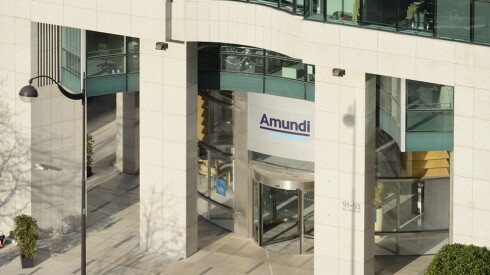
Dans un marché lui-même en contraction, l’action Amundi cède près de 6% à la mi-séance dans le sillage de la publication de ses résultats annuels et de ses objectifs 2020. Si les résultats du quatrième trimestre sont de bonne facture, les investisseurs sanctionnent des perspectives jugées décevantes. Alors qu’elle affichait début février une hausse de plus de 70% depuis l’IPO du gérant d’actifs bouclée fin 2015, l’action Amundi subit aussi des prises de bénéfices.
Candriam Investors Group a annoncé ce matin une prise de participation de 40% au capital de Tristan Capital Partners, un gestionnaire immobilier londonien. Cette boutiqué née d’un spin-off d’AEW affiche 9,1 milliards d’euros sous gestion. Son expertise apporte une première pierre dans l’immobilier à Candriam,qui pourra monter au capital dans les prochaines années. Ex-Dexia AM devenu filiale de New York Life Investment Management, Candriam gère plus de 112 milliards d’euros à Bruxelles, Paris, Londres et Luxembourg.
Vendredi 9 février 2018, le gestionnaire d’actifs multi-spécialiste européen Candriam Investors Group, filiale de New York Life Investment Management LLC, a annoncé sa prise de participation dans le capital de Tristan Capital Partners à hauteur de 40 %. Une opération qui doit lui permettre de se lancer pour la première fois dans l'immobilier. Elle prévoit en outre une première option de monter au capital au cours des prochaines années.
A l’occasion de la publication des résultats de son activité pour l’année 2017, Amundi AM a dévoilé une collecte nette de plus de 70 milliards d’euros. Le numéro un de la gestion d’actifs en Europe s'est également fixé un nouveau plan de développement consistant, notamment, en un objectif de 150 milliards d’euros de collecte nette entre 2018 et 2020.
L’Autorité des marchés financiers a publié le 7 février une étude comparative qui met l'accent sur la réalité de la rentabilité de l’épargne financière.
ATP achieved an exceptionally solid return of DKK 29.7bn in the investment portfolio before expenses and tax for the full year 2017, corresponding to 29.5 per cent relative to the bonus potential. Overall, ATP achieved a profit for the year of DKK 24.7bn before life expectancy update and increase in pensions. DKK 1bn was transferred to guarantees as a consequence of increased life expectancy. To this should be added an increase in pensions of DKK 6.4bn, equivalent to a 1 per cent increase in bonus for all members. Profit for the year thus came to DKK 17.3bn.“We achieved an exceptionally solid return in 2017 and generated the best investment return in many years. The strong performance is due to positive contributions from virtually all asset classes, which has made it possible to increase pensions for all members, while also being able to build up our bonus potential by DKK 17.3bn. So it’s been an excellent year for our members,” says ATP CEO Christian Hyldahl.The results were driven mainly by strong returns on equities as a result of price increases in global equity markets and moderate interest rate increases in Europe. Thus, private equity alone generated a return of DKK 5.3bn, listed international equities contributed DKK 4.9bn, while listed Danish equities posted a return of DKK 4.2bn. However, the growth was achieved broadly across the portfolio: Inflation-related financial instruments, credit, bonds, real estate and infrastructure contributed to the extraordinary investment return.At year-end 2017, ATP’s bonus potential, which is managed in the investment portfolio, stood at DKK 117.7bn.ATP’s Supervisory Board has adjusted the long-term performance target from 7 per cent to 11 per cent to underpin the objective of preserving the real value of pensions. In 2018, the performance target is equivalent to DKK 12.9bn. This is an absolute objective which is to be achieved in the long term, but which is not necessarily achieved each year.
GCM Grosvenor has completed the final close of its Secondary Opportunities Fund II, L.P. with USD700 million in committed capital, the Chicago-based firm announced today. GSF II, which held its first close in May of 2017, reached the fund’s hard cap.Fund investors include public and Taft-Hartley pension plans, financial institutions, healthcare systems and endowments, in the U.S., Europe and Asia.GSF II will acquire interests in private funds through secondary market transactions, with a focus on transactions of less than USD50 million average deal size. GSF II will target funds oriented toward small and middle market buyout, special situation, growth equity, infrastructure and real estate investment strategies.GCM Grosvenor has been active in secondary transactions since 2003, with over USD2 billion committed to more than 100 investments. «We are grateful for the support we received from investors,» said Brian Sullivan, Managing Director and head of the firm’s secondaries business. «They, like us, view secondaries as a means to diversify their private equity portfolio with mature, high-quality assets, while seeking to mitigate the j-curve and reduce blind pool risk. We continue to see value in the secondary market, and are confident we will identify compelling opportunities on behalf of our investors."About GCM Grosvenor: GCM Grosvenor is a global alternative asset management firm with approximately USD50 billion of AUM in hedge fund strategies, private equity, infrastructure, real estate and multi-asset class solutions. It is one of the largest, most diversified independent alternative asset management firms worldwide.
p { margin-bottom: 0.1in; line-height: 115%; } Edmond de Rothschild Investment Partners (Edrip) on 7 February announced that it has completed fundraising for the 5th generation of its BioDiscovery fund, dedicated to biotechnologies and medical technologies, with EUR345m (USD420m). BioDiscovery 5 has exceeded its initial target of EUR250m, to become “the venture capital fund dedicated to the life sciences and medical technologies, at all stages of development, in Europe and the United States,” Edrip says. So far, the BioDiscovery 5 fund has already made three investments, in Erythec Pharma, Complexa Inc., and LogicBio Therapeutics. Since the launch of the BioDiscovery range 17 years ago, the management team has raised nearly EUR800m to invest in 57 companies in the life science sectors.
Latin America’s investment bank BTG Pactual and Switzerland’s asset manager Capital Dynamics have announced an exclusive partnership to distribute funds to institutional investors across Latin America.This partnership will enable BTG Pactual’s Third Party Distribution division to promote Capital Dynamics’ private asset investment offerings to investors across the region.Capital Dynamics is known for its experience in private equity, private credit and clean energy infrastructure and currently oversee USD 15 billion in assets under management and advisement.
BNP Paribas Securities Services, a leading global custodian with EUR 9.4 trillion in assets under custody, today announces it has agreed to acquire Banco BPM SpA’s (BPM) depositary banking business. BPM is Italy’s third largest bank.BNP Paribas Securities Services, a leading global custodian with EUR 9.4 trillion in assets under custody, today announces it has agreed to acquire Banco BPM SpA’s (BPM) depositary banking business. BPM is Italy’s third largest bankBPM’s depositary bank has around EUR 22 billion in assets under custody and provides custody, fund administration and depositary banking services to funds and institutional clients in Italy.This transaction strengthens the overall position of BNP Paribas Securities Services as the leading provider of post-trade services in Italy, where it safe keeps EUR 850 billion of client assets.A price of EUR 200 million has been agreed, associated to long-term agreements. The deal is set to close in June 2018 and is subject to customary conditions including regulatory approval.BNP Paribas Corporate and Institutional Banking and Mediobanca – Banca di Credito Finanziario S.p.A. acted as financial advisors to BNP Paribas Securities Services. Chiomenti acted as legal advisor.
p { margin-bottom: 0.1in; line-height: 115%; } The Australian asset management firm First State Investments is adding to its distribution team for the German and Austrian markets, with the appointment of Robert Retz as vendor, the specialist website Das Investment reports. He will be based in Frankfurt, and will concentrate on distribution of the First State product range on the German market. Retz had previously worked at Aberdeen Asset Management, where he had been responsible for development. First State, which opened its Frankfurt office in 2012, would like to accelerate its development in the German-speaking markets, serving wholesale and institutional clients.
River and Mercantile announces that portfolio manager Philip Rodrigs has today left its subsidiary, River and Mercantile Asset Management LLP (RAMAM), following an investigation into a professional conduct issue. The conduct issue was unrelated to his portfolio manager responsibilities and has not impacted the pricing or NAV of any RAMAM fund and no client or investor has been negatively affected in connection with this matter, the company said. Philip Rodrigs left on Wednesday 7 February 2018. He was previously lead manager of the River and Mercantile (‘R&M’) UK Equity Smaller Companies Fund, the R&M UK Dynamic Equity Fund, and the R&M UK Micro Cap Investment Company Limited. In each case the principal portfolio management responsibility has passed to an alternate manager within RAMAM’s successful ‘PVT’ team in accordance with its well established succession plans.The R&M UK Equity Smaller Companies fund will now be managed by Dan Hanbury, who previously ran this fund prior to Philip Rodrigs’ appointment in September 2014; the multi-cap R&M UK Dynamic Equity Fund will be managed by William Lough, in addition to his continuing responsibilities as alternate to Hugh Sergeant on RAMAM’s High Alpha and Recovery strategies; and management of the R&M UK Micro Cap Investment Company Limited will pass to the alternate manager on this portfolio, George Ensor.
p { margin-bottom: 0.1in; line-height: 115%; } The research provider Morningstar on 7 February announced that it is expanding its index marketplace in software products, with the integration of external index data, which will allow investors to directly compare benchmark indices depending on their specific needs, he says. As part of the new initiative, the data and index provider FTSE Russell will be the first strategic collaborator to offer Morningstar performance and data about the indices. This will involve 70 families of international equity indices, which will be in line with Morningstar methodologies in the area. Morningstar says it is planning to offer more index comparison options, and more transparency. Morningstar will work with FTSE Russell to map approximately 10,000 global equity indexes to Morningstar’s global Category framework. Additionally, Morningstar will assign a single FTSE Russell index to each category as the Category Benchmark replacement option, providing users the ability to compare all investment choices in the category to indexes supplied from a single index vendor.
The Nortia companies, specialised in life insurance and distribution to IFAs, Nortia Invest, a designer of securities account solutions and a banking platform, and the asset management firm Haas Gestion have now teamed up in a single group entitled DLPK. To support its growth ambitions, DLPK has chosen to bring the investment fund BlackFin Capital Partners on board as part of capital in the group, with 34%.BlackFin, a European leader in private equity specialised in the financial services sector, is aiming to assist DLPK in its organic growth (launch of new products and services, extension of distribution, etc.) and the identification and execution of external growth operations.Vincent Dubois, CEO of Nortia, and his partners will retain the majority of capital and the governance of the new group.“We have strong ambitions to grow and diversify in the coming years. The entry into our capital of an investor like BlackFin allows us to consolidate the various entities of the Group in a permanent way, to make operational synergies, and to seize opportunities for external growth,” says Vincent Dubois, now chairman of DLPK.The three entities of DLPK made total earnings of EUR650m in 2017, bringing assets to EUR4.5bn as of the end of December 2017.
p { margin-bottom: 0.1in; line-height: 115%; } Charles-Henri Nême, manager of Exane Ceres, and Eric Lauri, collective fund manager, have been appointed as co-directors of management at Exane Asset Management, the asset management firm has announced. “The objective with these appointments is both to organize permanent support and to continue to progress the asset management team, without throwing responsibility for each manager over their fund into question,” a statement says. Nême has been working at Exane AM since 2007, and Lauri since 2012. Exane had assets under management as of 29 December 2017 of EUR5bn (EUR6.9bn including funds of funds), with 48 employees.
p { margin-bottom: 0.1in; line-height: 115%; } Assets under management at Vega Investment Managers, a multi-management affiliate of Natixis Asset Management, last year rose by about EUR800m to a total of EUR6.7bn as of the end of 2017, according to Marc Riez, CEO of the asset management firm, at a presentation of its outlooks for 2018. Net inflows contributed about EUR300m to this evolution. Collective management represents about 53% of assets, while mandated management represents 47%. According to Riez, “with the correction of the past few days, the markets have integrated the inflationary elements ignored previously. But this correction is not the prelude to a great market fall,” the head adds, though he suggests that a second correction may come later in the year, which will put an end to the “myth of perennial growth.” However, the United States is now, like Europe, in a situation of needing to make up its accumulated lag behind the United States levels of 2008 before the crisis, by 10 GDP points, says Jean-Jacques Friedman, chief investment and mandated management officer at Vega IM. Spending on equipment at businesses can be expected to do most of the work for three reasons: high usage rates for industrial capacities; financial conditions that remain highly favourable in the euro zone, and an increase in demand which has been observed over several quarters, and which increased last year. In the turbulent environment of the past few days, Vega IM has announced that in December, for the first time in nine years, the firm decided to modify its allocation model, which is no longer overexposed to equities, but which has returned to neutrality. The objective is to increase manoeuvering room to take advantage of the opportunities generated at the start of the year with volatility peaks. As of 6 February 2018, the volatility peak observed in the correction on the US equity markets related to fears of rising long-term interest rates, “we have gone to 53%,” says Friedman. Meanwhile, in line with its active management style, Vega IM has adapted its stock-picking to the new, uncertain environment, and has adapted to a higher interest rate regime. The asset management firm has reduced its exposure to small and midcaps, which are the first to present liquidity problems in case of trouble. Vega IM is putting the finishing touches on industrial stocks which can retain the powerful competitive advantages of these, which may benefit from the rise in investment spending expected in Europe. Vega IM, pragmatic, is adding more value stocks to its portfolio, such as oil and mining industries in general (commodities, precious metals), and last but not least, financials.
p { margin-bottom: 0.1in; line-height: 115%; }a:link { } Assets under management at ABN Amro Private Banking as of the end of 2017 totalled EUR200.6bn, compared with EUR197.1bn one quarter earlier, the Netherlands-based banking group announced on 7 February at a presentation of its results. The increase is related to a net inflow of EUR1.7bn, and a positive market effect of EUR1.8bn, a statement says. Assets were down, however, compared with their level one year previously (EUR204.9bn). Net profits for the Private Banking division in fourth quarter fell 38% to EUR30m, due to a goodwill depreciation. For the year overal, however, net profits are up 94% to EUR386m. The cost/income ratio has improved to 71.1% for the year as a whole, compared with 79.5% in 2016. Over the past year, the division has restructured its organisation, which has brought new savings due to digitalisation. Group-wide, ABN Amro has earned net profits of EUR2.8bn, including a capital gain on the sale of private banking activities in Asia.
p { margin-bottom: 0.1in; line-height: 115%; } Copernicus Holding, a financial company based in Lugano, has made an offer to take over 100% of capital in Thalia, a Lugano-based business specialised in speculative funds, the news agency AWP reports. The operation will create a centre of expertise in asset, wealth and risk management in Ticino, Copernicus said on Tuesday. The sale price has not been disclosed. The financial market surveillance autority (Finma) has yet to grant approval to the acquisition.
BlackRock lance un fonds dynamique « high-income », rapporte Citywire. Le BlackRock Global Funds (BGF) Dynamic High Income sera géré par l’équipe multi-asset income qui représente 30 milliards de dollars et se compose de Michael Fredericks, Justin Christofel et Alex Shingler. Le fonds cherchera à investir dans des REITs mondiaux, des actions préférentielles, des prêts à taux variables, des MBS et des options d’achat couvertes par des actions. La stratégie avait d’abord été lancée aux Etats-Unis et maintenant BlackRock la propose dans un format Ucits.
Goldman Sachs Fund Solutions, une activité de Goldman Sachs Securities Division, a conclu un partenariat avec Amundi pour la gestion de ses plateformes de fonds luxembourgeois, a annoncé ce 7 février la société de gestion française. Cet accord, qui porte sur les stratégies quantitatives de Goldman Sachs et son offre de fonds Ucits alternatifs, est noué « alors que la firme vise à accélérer le développement de ces activités, notamment auprès des investisseurs institutionnels et des institutions financières de taille intermédiaire », selon un communiqué. « Ce partenariat démontre l’engagement de Goldman Sachs International sur le marché de la gestion collective en Europe et au-delà », indique Stefan Bollinger, co-directeur des ventes Monde de structurés « Strats and Structuring » chez Goldman Sachs Securities Division, cité dans un communiqué.Grâce à sa nouvelle ligne métier Amundi Services, Amundi assurera la gestion administrative, le contrôle et la supervision des véhicules d’investissement de droit luxembourgeois assis sur les stratégies systématiques de Goldman Sachs. Le groupe français fournira également un service de gestion ainsi que l’analyse et le suivi des gérants externes présents sur sa plateforme Ucits de fonds alternatifs. A fin septembre 2017, Amundi gère plus de 300 compartiments de droit luxembourgeois (Ucits et AIF) représentant quelques 144 milliards d’euros d’actifs sous gestion, précise la société de gestion. « Ce partenariat illustre l’ambition d’Amundi de développer et offrir des infrastructures de services de pointe à destination des investisseurs institutionnels, asset managers et distributeurs de fonds, précise Guillaume Lesage, directeur de la division Opérations, Services et Technologie d’Amundi. Depuis 2016, Amundi Services a déjà attiré plus de vingt gestionnaires d’actifs et investisseurs finaux comme clients. ». Le français remplacera le prestataire actuel FundRock, l’ex-RBS Luxembourg contrôlé désormais par le fonds français BlackFin, précisait ce matin L’Agefi s’appuyant sur une autre source.La plateforme opérationnelle d’Amundi permet l’exécution des ordres, la gestion des données, l’ensemble des traitements et reporting, la vérification du respect des règles d’investissement et le calcul d’indicateurs de risque sur les portefeuilles. Cette plateforme est interconnectée avec plus de 40 dépositaires au niveau international et gère 6.000 portefeuilles de tout type.
Le gestionnaire d’actifs américain Invesco vient de lancer les fonds Invesco Sustainable Allocation et Invesco Global High Yield Short Term Bond, deux nouveaux véhicules Ucits domiciliés au Luxembourg, rapporte InvestmentEurope. Le fonds Invesco Sustainable Allocation est co-géré par Manuela von Ditfurth et Martin Kolrep, tous deux gérants de portefeuille senior au sein de l’équipe Invesco Quantitative Strategies (IQS). Ce produit investit principalement dans des actions et des dettes à l’échelle mondiale tout en intégrant des critères de sélection ESG (environnement, social et gouvernance).Pour sa part, le fonds Invesco Global High Yield Short Term Bond est co-géré par Joe Portera et Jennifer Hartviksen, gérants de portefeuille obligataire. Il investit dans des titres high yield à l’échelle mondiale mais en se concentrant sur des durations courtes, comprises en moyenne entre 1 et 3 ans.
Valeur Capital, une boutique basée à Londres, a lancé une plate-forme Ucits pour élargir sa gamme de fonds, rapporte Citywire. Anteo Luxembourg a été lancé avec 250 millions d’euros sous gestion et trois compartiments actifs, dont Anteo Equity Volatility, Anteo Fixed Income Relative Value and Opportunities et Anteo Nightingale.