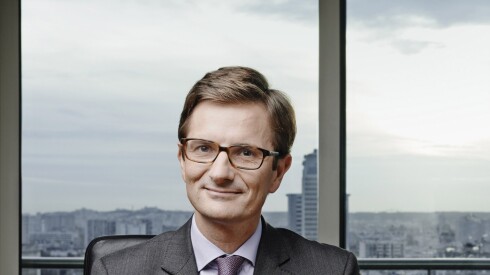
Le gestionnaire d’actifs britannique Fulcrum Asset Management (Fulcrum AM) a annoncé, ce 12 février, le recrutement de Mark Horne en qualité de « director » au sein de sa nouvelle équipe baptisée Fulcrum Alternative Stratégies. L’intéressé est rattaché à Matthew Roberts, associé chez Fulcrum AM. Précédemment, Mark Horne a travaillé comme consultant indépendant dans le secteur de la gestion d’actifs à Londres et à Paris. Avant cela, il a été « senior credit manager researcher » chez Willis Towers Watson et directeur des services clients chez Natixis Global Associates.
Artur Kampik, responsable de la stratégie d’investissement de Vontobel en Allemagne et basé à Munich, a quitté fin janvier la banque privée, selon Private Banking Magazin à qui l’information a été confirmée par une porte-parole qui a en outre indiqué que son successeur n’avait pas encore été nommé.Artur Kampik avait rejoint Vontobel en juillet 2011 en provenance de Sal. Oppenheim.
UBI Pramerica SGR, société issue du partenariat entre Gruppo UBI Banca et Pramerica Financial, a recruté Fabrizio Fiorini en tant que directeur des investissements.L’intéressé vient d’Aletti Gestielle Sgr où depuis 2011 il était responsable des investissements, après avoir été responsable des obligations. UBI Pramerica SGR a enregistré en 2017 des souscriptions nettes de 6,7 milliards d’euros et vu ses encours monter à 58,9 milliards d’euros.
Hedge Invest Sgr, société de gestion italienne spécialisée dans la gestion alternative, vient de recruter Giuseppe Bonsignore en tant que directeur des opérations, rapporte Bluerating. L’intéressé a notamment été directeur général de Banca Leonardo, jusqu’à en 2011. Il a aussi travaillé chez Morgan Stanley et Lehman Brothers en Italie.
UniCredit vient de nommer Marco Bizzozero responsable du groupe gestion de fortune (Wealth Management), à compter du 1er mars. L’intéressé vient de Deutsche Bank Group où il travaillait depuis 2004 et était responsable de la gestion de fortune Europe, Moyen-Orient et Afrique et CEO de Deutsche Bank Suisse pendant huit ans depuis 2009. Avant cela, il était responsable mondial des investissements en private equity. Marco Bizzozero sera rattaché à Gianni Franco Papa, general manager d’UniCredit. Le groupe gestion de fortune d’UniCredit se concentre sur la gestion de fortune et la banque privée en Europe, avec un biais sur l’Italie, l’Allemagne et l’Autriche.
La société de gestion Degroof Petercam AM a nommé Benoît Ruelle au poste de responsable de la sélection de fonds externes, rapporte le site InvestmentEurope. Benoît Ruelle prend la succession de Jean-Marc Turin, qui occupait ce poste depuis octobre 2015. Il sera à la tête d’une équipe de cinq collaborateurs. Benoît Ruelle était gérant-analyste de portefeuille senior chez Degroof Petercam AM depuis décembre 2011. Jean-Marc Turin devrait prendre en main la gestion de quatre fonds d’allocation multi-classes d’actifs, qui sont des compartiments de la sicav luxembourgeoise de Degroof Petercam AM, DPAM Global Strategy L. Jean-Marc Turin aura donc en charge les stratégies phare Degroof Petercam Global Strategy L Low, Medium, Medium Low et High qui affichaient des actifs sous gestion de 8,7 milliards d’euros à fin décembre 2017.
Le groupe suisse Union Bancaire Privée (UBP) a recruté Thierry Garde en qualité de responsable de sa succursale de Monaco à compter du 1er février 2018. Précédemment, l’intéressé officiait, depuis 2013, en tant que directeur général de Société Générale Private Banking à Monaco. Il a travaillé pendant 30 ans au sein du groupe Société Générale, où il a occupé plusieurs fonctions en France et à l’international (notamment Moscou, Varsovie, New York, Londres et Bruxelles), tant pour la banque d’investissement que pour la banque privée. Thierry Garde est également vice-président de l’Association monégasque des activités financières (AMAF), en charge de la Commission des Affaires sociales, rôle qu’il continuera à assurer parallèlement à sa fonction de responsable d’UBP Monaco.
Acofi Gestion a annoncé ce matin avoir levé près de 700 millions d’euros depuis juillet 2017 pour son activité de dette immobilière, La société de gestion, qui poursuit la levée de son fonds LF Predirec Immo 5, espère désormais atteindre d’ici la fin de l’année un encours de 1,2 milliard d’euros sur cette classe d’actifs.
L’indice américain des prix à la consommation (CPI) a augmenté de 0,2% en décembre au lieu de la hausse de 0,1% initialement annoncée le 12 janvier, selon des révisions pour la période 2013-2017 publiées lundi par le département du Commerce. Hors alimentation et énergie, la hausse des prix à la consommation ressort à 0,2% après révision, au lieu de +0,3%. La statistique du mois de janvier sera publiée demain mercredi; les économistes interrogés par Reuters prévoient en moyenne une hausse mensuelle de 0,3%, et de 0,2% en faisant abstraction des éléments volatils.
Ampere Gestion, la filiale de CDC Habitat, se voit confier un mandat de 200 millions d’euros dans le résidentiel, principalement dans le logement intermédiaire.
Un tiers des encours pour compte de tiers de la filiale de gestion de Groupama est désormais géré pour des clients étrangers, dont un institutionnel du Moyen-Orient.
Fidelity International a annoncé hier la nomination de Romain Boscher comme responsable mondial des investissements en actions. Romain Boscher était depuis sept ans responsable mondial actions chez Amundi. Depuis l'été dernier, il partageait toutefois ses fonctions avec Diego Franzin (venu de Pioneer suite à l’acquisition de la filiale de gestion d’UniCredit par Amundi), alors que les autres classes d’actifs d’Amundi n’ont, de leur côté, qu’un seul responsable global. Diego Franzin a du coup pris seul la direction mondiale des actions, précise la société de gestion à L’Agefi. Il est épaulé par Alexandre Drabowicz, nommé adjoint. Chez Fidelity, Romain Boscher remplace Dominic Rossi, qui avait annoncé l’an dernier sa volonté de partir début 2018. Il rejoindra le groupe américain le 30 avril et sera basé à Londres.
La Bourse de New York a fini en hausse lundi pour sa deuxième séance consécutive - ce qui semble refléter un regain de confiance de la part des investisseurs après la plus forte baisse hebdomadaire du marché américain depuis deux ans. L’indice Dow Jones a gagné 1,69% à 24.600,13 points. Le S&P 500, plus large, a pris 1,39%, à 2.655,92 points. Le Nasdaq Composite a avancé de son côté de 1,57% à 6.982,66 points.
Bank of Nova Scotia (Scotiabank) a annoncé l’acquisition du gestionnaire d’actfis canadien Jarislowsky Fraser pour environ 950 million de dollars canadiens (614 million d’euros). La banque pourrait être amenée à payer 56 millions de plus si certains objectifs de croissance étaient remplis. L’opération permet à Scotiabank d’augmenter ses encours de 40 milliards, pour les porter à 166 milliards de dollars d’actifs sous gestion - soit le numéro trois canadien.
Les cours du pétrole ont fini sur une note presque stable lundi sur le marché new-yorkais Nymex, après une semaine de vif recul, le rebond ayant été freiné par la hausse de la production de pétrole de schiste aux Etats-Unis en mars. Selon l’Agence américaine d’information sur l'énergie, elle est attendue en hausse de 111.000 barils par jour (à 6,757 millions de bpj) en mars, contre une augmentation de 109.000 bpj en février. Le contrat mars sur le brut léger américain (WTI) a gagné 0,15%, à 59,29 dollars le baril. Le Brent a cédé 0,32% à 62,59 dollars. La semaine dernière, le WTI a chuté de 10,1% et le Brent de 8,9% sur fond de correction boursière et de hausse de l’offre.
Créé le 5 janvier 2004, le bureau de Pictet Wealth Management (WM) à Paris propose des services de gestion de fortune dans l'Hexagone. Le groupe Pictet gère aujourd'hui 435 milliards d'euros, dont 4,7 milliards d'euros en France. Il ambitionne de passer la barre des 10 milliards d'euros dans les 7 années à venir en s'appuyant uniquement sur la croissance organique et le recrutement de nouveaux talents.
Retrouvez en vidéo les meilleurs moments des Clubs Dates Invest qui se sont déroulés à Lille le 14 septembre dernier et rendez-vous à Nantes le 29 mars 2018.
Fidelity International a annoncé aujourd’hui la nomination de Romain Boscher comme responsable mondial des investissements en actions. Romain Boscher était depuis sept ans responsable mondial actions chez Amundi. Depuis l'été dernier, il partageait toutefois ses fonctions avec Diego Franzin, issu de Pioneer, suite à l’acquisition de la filiale de gestion d’UniCredit par Amundi. Les autres classes d’actifs du numéro un européen de la gestion d’actifs ont, de leur côté, un seul responsable global.
BP compte investir plus d’un milliard de dollars (816 millions d’euros) en Egypte cette année, faisant de nouveau de ce pays une de ses priorités en matière d’investissements, a déclaré lundi son directeur général. Bob Dudley a indiqué que le gouvernement égyptien avait soldé ses comptes avec la compagnie pétrolière britannique. «Le gouvernement ne nous doit pas d’argent», a-t-il dit en marge d’un événement en Egypte. Soucieux d’attirer de nouveaux investissements dans l'énergie, Le Caire s’est engagé à régler les arriérés dus aux compagnies pétrolières étrangères d’ici la fin juin 2019 et à ne pas en accumuler d’autres. Fin juin 2017, ces arriérés se montaient à 2,4 milliards de dollars. Bob Dudley a ajouté que BP prévoyait un pétrole compris entre 50 et 65 dollars le baril jusqu’en 2020.
L’indice américain des prix à la consommation (CPI) a augmenté de 0,2% en décembre au lieu de la hausse de 0,1% initialement annoncée, selon des révisions pour la période 2013-2017 publiées lundi par le département du Commerce. Hors alimentation et énergie, la hausse des prix à la consommation ressort à 0,2% après révision, au lieu de +0,3%. La statistique de décembre avait été publiée le 12 janvier. Celle de janvier le sera mercredi et les économistes interrogés par Reuters prévoient en moyenne une hausse mensuelle de 0,3%, et de 0,2% en faisant abstraction des éléments volatils.
@page { margin: 0.79in }p { margin-bottom: 0.1in; line-height: 115% }Afterbeing neglected for several years, Europe is attracting capital frominvestors who want to profit from its rebounding economy, Bloombergreports. Hedge funds investing exclusively in Europe took in aboutUSD6bn in 2017, whereas they had seen redemptions in the previous 12months, according to eVestment. By comparison, the United States andAsia put together suffered net redemptions totalling about USD24bn.
CrossingBridge Advisors, a wholly owned subsidiary of Cohanzick Management, announces that it has acquired the Collins Long/Short Credit Fund from Collins Capital in a transaction executed in January 2018. The fund, which has been sub-advised by Pinebank Asset Management, LP (an affiliate of Cohanzick), was launched in February 2015 and currently has in excess of USD100 million in AUM. Pinebank founder and portfolio manager, Oren Cohen, will continue to manage the fund in his capacity as an employee and portfolio manager of CrossingBridge, thereby eliminating the sub-advisory relationship and managing all investment and operational functions under one roof. An investor proxy vote will be required to approve the transaction. Cohanzick, founded by David Sherman, currently has approximately USD2 billion in assets under management focused primarily on the domestic corporate credit markets.
@page { margin: 0.79in }p { margin-bottom: 0.1in; line-height: 115% }In2017, the Italian asset management firm Anima posted netsubscriptions of over EUR900m, and had assets totalling aboutEUR94.4bn, thanks to the integration of Aletti Gestielle Sgr (withassets of EUR19bn). Not counting the acquired assets undermanagement, assets at Anima as of 31 December totalled EUR75.3bn, upby 4% compared with the end of December.
Hedge funds surged to begin 2018 as equity markets turned in the strongest January since 1997, despite equity, currency and fixed income market volatility building into month-end. The HFRI Fund Weighted Composite Index gained +2.8 percent for the month, the strongest monthly return since December 2010 and the best January return since 2006. The gain extended the streak of consecutive monthly gains to 15 and lifted the record Index Value to 14,465, according to data released today by HFR®, the established global leader in the indexation, analysis and research of the global hedge fund industry.While all main strategies advanced for the month, industry performance was led by Macro strategies, with the HFRI Macro (Total) Index climbing +3.7 percent, the best monthly gain since February 2008. Macro sub-strategy performance was led by quantitative, trend-following CTA strategies, with the HFRI Macro: Systematic Diversified Index vaulting +4.8 percent, the strongest return since October 2008. Fundamental Macro also advanced for the month, as the HFRI Macro: Discretionary Thematic Index gained +3.6 percent, while the HFR Macro: Multi-Strategy Index added +3.4 percent.Equity Hedge funds also surged in January, with the HFRI Equity Hedge (Total) Index advancing +3.0 percent, led by Technology and Emerging Markets exposures. The HFRI EH: Technology Index gained +5.9 percent for the month, the best performance since Index inception in 2008. The HFRI Emerging Markets (Total) Index jumped +5.1 percent in January, led by the Latin America and Russia sub-indices, which gained +7.2 and +5.9, respectively. «After a historic year in 2017, hedge funds began 2018 extending strong gains, even as realized and implied volatility associated with global equities, currencies (including cryptocurrencies), commodities, fixed income and the outlook for global inflation all increased,» stated Kenneth J. Heinz, President of HFR. «Hedge funds will continue to navigate these volatile markets and asset classes in 2018, monetizing opportunities generated by US tax cuts and infrastructure spending, US monetary policy, and corporate M&A and special situations. These themes are likely to drive performance and industry growth in 2018.»
The ground disappeared beneath the equity markets early last week, as investor fears that inflation and interest rates will rise more rapidly than expected triggered massive divestment from equities. In the week ending on 7 February, equity funds posted net outflows of USD30.6bn, according to weekly statistics from Bank of America Merrill Lynch, based on data from the global flow monitoring speciaist EPFR Global. This is the largest weekly outflow ever recorded since data from EPFR Global began.More specifically, funds dedicated to US equities have seen net outflows of USD33bn, while funds specialised in European equities have seen redemptions of USD3.3bn, the largest weekly total in 79 weeks. However, emerging market equity funds have continued to attract investors, and posted net inflows of USD2.4bn. Funds specialised in Japanese equities attracted USD2.4bn, the largest weekly total in 65 weeks.Bond funds, for their part, have seen inflows of USD4bn. European bond funds returned to positive net inflows, after three consecutive weeks of net outflows. Funds investing in precious metals, principally gold, did not really benefit from the rise in risk aversion, with net inflows of no more than USD500m.
@page { margin: 0.79in }p { margin-bottom: 0.1in; line-height: 115% }The macro hedge fund Element Capital Management has had a strong start to the year. The fund, with assets under management of about USD12.5bn, earned returns of 10% in January alone, through investments in equity and fixed income markets, a spokesman for the firm has told Bloomberg. In the final months of 2017, the hedge fund revised its portfolio to bet on an overhaul fo the US tax code. This reorientation wiped out its losses in the previous month and brought it gains for the year overall of 5.5%. Since its launch in 2005, the hedge fund has seen gains of about 20% per year.Macro strategies, which overall performed poorly in 2017, have returned to good health at the start of this year. According to estimates by Eurekahedge, the strategy gained about 2.7% in January, its best result for a single month since 2010. Element has earned excellent returns in the past few years, with 19% in 2016 (compared with 2.3% for traditional macro hedge), and 23% in 2015, at a time when macro hedge funds were losing 1.2%. In March 2017, the hedge fund raised USD2bn in two weeks, and it is not planning to raise new capital at this time, it states.
@page { margin: 0.79in }p { margin-bottom: 0.1in; line-height: 115% }Calao Finance on 9 February announced that it one of its funds is investing in Isybot, a French specialist in collaborative robots, with CEA Investissement and Scientipole Capital, for total financing of nearly EUR1bn. Isybot designs and assembles collaborative robots (“cobots”) created on the basis of research from CEA Tech.Isybot, founded in November 2016, and fresh from its first sales to big-name industrials, has completed a first round of fundraising with twice its objective, to industrialise the first deployments of its “cobots,” and to reinforce teams to address client challenges.The robot market is growing fast. In the next five years, the industrial robot market is expected to double, while the collaborative robot market will grow by a factor of 10 (Etudes BCG, IFR, ABI Research, Myria Research), a statement says.
@page { margin: 0.79in }p { margin-bottom: 0.1in; line-height: 115% }Theinfrastructure fund Swiss Life Funds (Lux) Global InfrastructureOpportunities II has acquired a 24.3% stake in the capital of PistoSAS from Lombard Odier Macquarie Infrastructure Fund (LMIF), SwissLife Asset Managers has announced. Pisto SAS is the largestindependent oil logistics and storage operator in France. The firmoperates two fosil fuel import/export terminals, with appurtenantstorage facilities in the port of Le Havre. It also has six oilstorage and distribution facilities in western France, particularlythe Paris region. Pisto SAS is also the largest shareholder inTrapil, the largest owner and operator of oil pipelines in France.Thecompletion of the transaction is subject to approval by the Europeancompetition watchdog and permission from the French government. Thesale price has not been disclosed.