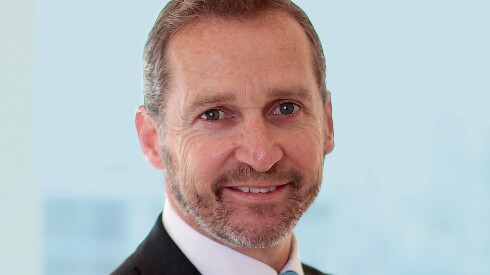
La parole à... Jyrki Katainen, vice-président de la Commission européenne chargé de l’emploi, de la croissance, de l’investissement et de la compétitivité
Marges. La meilleure défense, c’est l’attaque. Bénéficiant de solides fondamentaux, les gestionnaires d’actifs s’en remettront plus que jamais en 2018 à la croissance externe pour se distinguer. Tel est le sentiment de Fitch à l’occasion d’une revue du secteur, qui conserve une perspective stable de notation. Les marges de l’univers scruté restent, selon l’agence, élevées mais sous pression, sur fond de coût croissant de la conformité réglementaire et d’une compétition toujours plus vive et exacerbée par le succès de la gestion passive. Fitch note que le marché a récemment bien accueilli les opérations « quand les gains issus des synergies de coûts étaient évidents et que les acteurs étaient considérés comme complémentaires ».
La collecte record enregistrée sur les OPCI cette année suscite l’intérêt. L’Association française des sociétés de placement immobilier (Aspim) souhaiterait utiliser cette manne pour financer des infrastructures, et pourquoi pas des prisons, a indiqué son président Frédéric Bôl lors d’une table ronde célébrant le 10e anniversaire des OPCI. Alors que l’Etat annonçait en février dernier la construction de 24 nouvelles prisons, l’Aspim pourrait lancer un Organisme de placement en centre d’incarcération. Taux d’occupation garanti.
En manque. Les politiques non conventionnelles des banques centrales, à l’exemple des programmes de rachats de titres émis par les Etats de la zone euro par la Banque centrale européenne (BCE), ont amené les taux d’intérêt à long terme à des niveaux extrêmement bas, note Stéphane Deo, stratégiste à La Banque Postale Asset Management. La dette souveraine totale de la zone euro « défalquée des titres détenus dans le cadre des objectifs de la politique monétaire » donne à voir une nette inflexion à la baisse (voir le graphique). Il y a « pénurie d’actifs sans risque », explique Stéphane Déo, d’autant que « la réglementation contraint les institutions financières à acheter plus de titres obligataires : Bâle 3 pour les établissements bancaires et Solvabilité 2 pour les compagnies d’assurances ». En fin de compte, « l’offre d’actifs sans risque n’est pas suffisante », ajoute l’économiste de LBPAM, pour qui cette situation va « probablement » perdurer. Conséquences à prévoir, « une épargne retraite forcée et peu de rentabilité des banques et donc peu de prêts ». L’économiste Guillermo Tolosa, de l’organisme de recherche Oxford Economics, estime que le raison clé de la faiblesse à l’échelle mondiale des rendements obligataires (note intitulée Bond Investors Unlikely to Fill Official Demand Gap) réside dans le manque d’offre. Même en tenant compte des achats des banques centrales, la croissance de la demande « post-crise » pour des actifs fixed income s’est réduite.
A 81 ans, Silvio Berlusconi (photo) est inéligible en raison d’une condamnation pour fraude fiscale qu’il cherche à faire annuler. Mais le Cavaliere ne désespère pas pour autant de gagner avec son parti Forza Italia aux élections législatives du printemps prochain le droit de participer au gouvernement. Il a même désigné son cadet le général Galitelli, 69 ans et ancien patron des carabiniers, comme possible chef du gouvernement. Ce dernier, qui s’occupe de l’antidopage en ce moment, n’avait même pas été informé de l’initiative de l’ancien président du Conseil. Quelques jours plus tôt, Silvio Berlusconi avait lancé en l’air les noms de Mario Draghi (Banque centrale européenne) et de Sergio Marchionne (Fiat) pour occuper la fonction. On va finir par croire que le géronte n’est plus fréquentable.
Masse monétaire. Caceis l’avait annoncé. Tobam l’a fait. Le gestionnaire quantitatif vient de lancer le premier fonds européen dédié au bitcoin. Tobam Bitcoin Funds, fonds d’investissement alternatif (FIA), s’affiche comme un « produit financier extrêmement diversifiant », selon le patron du gestionnaire Yves Choueifaty (photo), qui indique avoir planché plus d’un an avant son lancement. La cyber-monnaie présente une performance à trois chiffres qui pousse quelques sociétés de gestion à réfléchir à la structuration d’une offre destinée à une clientèle avisée. Eiffel IG réfléchit à la struturation d’un véhicule pour que soit logée cette monnaie en propre. Outre-Atlantique, malgré le rejet de la Securities and Exchange Commission (SEC) en début d’année de l’agrément de deux ETF (exchange-traded funds) Bitcoin arguant une insuffisance réglementaire, l’annonce le 24 juillet de la CFTC (Commodity Futures Trading Commission) d’autoriser LedgerX à fournir des services de compensation pour les swaps de devises numériques, fait naître tous les espoirs. Une révolution est-elle en marche ?
S’il existe une économie dont la courbe de Phillips est plus plate que plate, c’est l’Allemagne. Le chômage atteint un record historique (3,8 %), mais la croissance du salaire horaire reste en phase avec la moyenne des dix dernières années. Conclusion : l’inflation sous-jacente est à peine concernée. Pour nombre d’analystes, il faut en chercher la cause dans l’immigration de ces dernières années. Le processus de relocalisation de la production impliquerait-il de délocaliser la main-d’œuvre ?
Dix ans après le déclenchement de la crise, les financiers français esquissent un sourire. L’enquête que L’Agefi et KPMG réalisent depuis neuf ans montre que leur humeur se dégrise et que la régulation qui les submerge depuis près d’une décennie trouve enfin grâce à leurs yeux (lire notre rubrique Horizons). Au rebours de l’opinion exprimée l’an dernier encore, ils considèrent à une confortable majorité que la stabilité financière est mieux assurée. Mieux : alors que leurs associations et leurs régulateurs bataillent depuis des mois pour finaliser Bâle 3 à des conditions les moins désavantageuses possibles, les trois quarts des banquiers interrogés se disent demandeurs d’une conclusion des négociations. Si, comme tout porte à le croire, celle-ci survient début décembre, ils s’assurent disposés à appliquer le compromis sans état d’âme.
Le gendarme financier britannique, la Financial Conduct Authority, a pointé hier du doigt quatre gestionnaires d’actifs: Artemis Investment Management, Hargreave Hale, Newton Investment Management et River & Mercantile Asset Management. Selon la FCA, les quatre asset managers auraient partagé en 2014 et 2015 des informations sur les prix qu’ils entendaient soumettre pour acheter des titres lors d’IPO. L’autorité précise qu’il s’agit là d’une étape intermédiaire dans la procédure. Les quatre gérants sont désormais invités à répondre aux accusations de la FCA.
iM Global Partner, la société de gestion et de distribution de la plateforme d'investissement iM Square, doit annoncer ce 30 novembre le lancement du premier compartiment de sa sicav de droit français iM Global Funds dont elle délègue la gestion à Dolan McEniry, une société de gestion américaine spécialisée dans le crédit US. Baptisé iMDolanMcEniry US Corporate, ce nouveau fonds sera accessible à une clientèle professionnelle européenne.
La CLCV rend publique sa première enquête sur l’assurance vie passant au crible 232 contrats. Suite à cette étude l'association demande aux professionnels de faire preuve d’équité dans l’attribution des rendements et de plus de transparence dans les informations données sur le produit commercialisé aux consommateurs.
L’Ircantec a dynamisé son portefeuille en augmentant la part des actions et celle du crédit, qui pesait respectivement 29% et environ 10% avant ce repositionnement. Cette évolution a été effectuée au détriment de la poche obligations nominale souveraines et assimilés, dont le poids dans l’allocation stratégique est ainsi passée d’environ 40% à 10%. Parallèlement, pour maintenir son approche défensive, l’institution est en train de mettre en place avec Allianz Global Investors une gestion dynamique du risque grâce à un overlay permettant de désensibiliser l’ensemble du portefeuille et de mieux piloter les risques.
Le gendarme financier britannique, la Financial Conduct Authority, a pointé mercredi du doigt quatre gestionnaires d’actifs: Artemis Investment Management, Hargreave Hale, Newton Investment Management et River & Mercantile Asset Management. Elle les soupçonne d’avoir violé les règles de concurrence lors de processus d’introduction en Bourse de certaines sociétés. Selon la FCA, les quatre asset managers auraient partagé en 2014 et 2015 des informations sur les prix qu’ils entendaient soumettre pour acheter des titres lors d’IPO.
Lightning has struck in the French insurance industry. AG2R La Mondiale and the Matmut group on 27 November announced that they are in exclusive talks “to study the opportunity for a merger project,” according to a statement. The merger “may be effective from 1 January 2019,” subject to the agreement of the governance bodies at the two groups, after emplyee representative bodies and the relevant supervisory authorities have given their approval. AG2R La Mondiale, the largest social protection group in France, has 15 million policyholders and 500,000 client businesses. As of the end of 2016, it had EUR18.2bn in complementary pension contributions and EUR10bn in personal insurance. The Matmut group, for its part, has over 3.3 million policyholders, and made earnings of EUR2bn in 2016. The two insurance companies are also major players in the asset management industry. AG2R La Mondiale Gestion d’Actifs, formerly Agicam, had nearly EUR26bn in assets as of the end of March 2017. Matmut holds a 25.8% stake in the OFI Asset Management group, with assets under management totalling EUR68bn.
Omnes Capital is adding to its venture capital arsenal of European startups. At a meeting with the press, the investment company announced the launch of the Omnes Real Tech fund, which aims to assist young B-to-B businesses in the deep tech sector in Europe.Omnes Capital is seeking to raise EUR100m to EUR150m for its new Omnes Real Tech fund. “We have won a mandate from the Fonds de Réserve des Retraits for EUR50m on this theme,” says Michel de Lempdes, managing partner responsible for venture capital at Omnes Capital. “Industrials and institutionals are also interested. We are planning a first closing for the fund in early 2018, to reach our hard cap of EUR150m during 2018.” The objective for the new vehicle, an FCPI-type fund (fonds professionnels de capital investissement), is to construct a portfolio of 15 to 20 European startups. “We are planning to invest 67% in France and 33% in Germany, Belgium and the Netherlands,” says de Lempdes. At this stage, “we are at three quarters of our first objective of EUR100m,” he says.
Vanguard filed a registration statement for six new factor-based ETFs and one factor-based mutual fund, representing Vanguard’s first introduction of actively managed ETFs in the U.S. The company currently offers suites of active factor ETFs in Canada and the United Kingdom. The new factor funds are expected to begin trading in the first quarter of 2018. Five single factor funds are designed for financial advisors and institutional investors seeking to achieve specific risk or return objectives through targeted factor exposures: minimum volatility, value, momentum, liquidity, and quality. The sixth ETF and fund will offer a multi-factor approach. Vanguard will employ an active, rules-based quantitative approach in managing the funds, which will also feature the traditional characteristic of all Vanguard funds—low cost. “Our factor-based fund offerings serve as a valuable extension of our low-cost active lineup, providing additional ways for suitable investors to help meet their long-term objectives by targeting exposure to specific factors in the market,” said Vanguard Chief Investment Officer Greg Davis. “With Vanguard’s actively managed, rules-based approach to factors, investors can now harness well-known factor exposure in a more transparent and low-cost way.” The new suite of active factor offerings includes: : - Vanguard U.S. Minimun Volatility ETF,- Vanguard U.S. Value Factor ETF,- Vanguard U.S. Momentum Factor ETF,- Vanguard U.S. Liquidity Factor ETF,- Vanguard U.S. Quality Factor ETF,- Vanguard U.S. Multifactor ETF,- Vanguard U.S. Multifactor Fund.The five single factor-based ETFs will have an estimated expense ratio of 0.13%; the Multifactor ETF and Multifactor Fund will have an estimated expense ratio of 0.18%. The Multifactor Fund will require a minimum initial investment of $50,000 for Admiral Shares.
As a black list of tax havens is about to be repleased by the European Union (EU) on 5 December, the NGO Oxfam has found that at least 35 countries meet the European Union’s criteria to be added to the list. The findings are based on its report “Liste noire ou carte blanche à l’évasion fiscale.” It finds that, an addition to “notorious tax havens such as Switzerland and Bermuda,” at least four European countries should also be on the list: Ireland, Luxembourg, the Netherlands, and Malta. This comes despite the fact that “the criteria exclude EU member states, which means that the major tax havens are omitted.” The body dedicated to fighting poverty says it fears that “due to internal and external political pressure, key tax havens are absent from the official EU blacklist.” Oxfam claims that “this blacklist is developed in the utmost secrecy, and citizens and non-governmental organisations have no right to witness its creation. The Maltese presidency of the EU has publicly called for an empty black list. Following a meeting with European finance ministers, the Swiss government has also openly declared that its country should not be on the list.”
BlackRock and Citibanamex, a subsidiary of Citigroup Inc. announced a definitive agreement for BlackRock to acquire the asset management business of Citibanamex, subject to regulatory approvals and customary closing conditions. BlackRock and Citibanamex will also enter into a distribution agreement upon the closing of the transaction to offer BlackRock asset management products to Citibanamex clients in Mexico. Through its network of 1,500 branches in Mexico, Citibanamex provides wealth management products and services to more than 20 million clients.The transaction involves approximately USD31 billion in assets under management of Citibanamex, across local fixed income, equity and multi-asset products, primarily for retail clients. The transaction is part of Citi’s emphasis on expanding access to best-in-class investments products, rather than on manufacturing proprietary asset management products. BlackRock’s business in Mexico currently focuses mostly on institutional clients, offering international investment and risk management products and services across asset classes, strategies and geographies.The agreement builds upon the long-standing relationship between BlackRock and Citi and brings together two leading firms to offer a wider range of products, enhanced technology and investment capabilities for clients.Armando Senra, Head of Latin America and Iberia for BlackRock, said: “BlackRock’s ambition is to become a full solutions provider in key markets around the world. This transaction is a big step forward in that direction in Mexico. The acquisition of Citibanamex’s asset management capabilities combined with our global investment platform and technology create a stronger franchise that can deliver a more compelling set of investment solutions across client segments in Mexico.”
Berenberg is strengthening its wealth management business division, as Angela Müller-Valkyser (53) will move from Deutsche Bank to Berenberg as of 1 January 2018 to become co-head of Wealth Management Germany.Over the past 22 years, Angela Müller-Valkyser has carried out various management functions in Corporate and Investment Banking as well as in Wealth Management at Deutsche Bank. Most recently, as a managing director there, she was responsible for strategic clients for the Region West.
Corporation Fiera Capital, an independent investment company in Canada, has launched a new fund, Fiera Immobilier, based on core mortgages and the limited designation of debt strategies from Fiera Immobilier, an exclusively owned subsidiary of Fiera Immobilier, as the entity responsible for its mortgage investment strategy. Fiera Capital will act as manger of the fund and portfolio manager for the fund. The variable capital fund will be available to retail investors and to accredited retail investors from December 2017, and will invest in mortgages subscribed to by top commercial borrowers in Canada. The fund will aim to provide investment income to investors, while guaranteeing capital protection over the long term. The management of the fund will be entrusted to two sectoral experts, Scott Rowland and Geoff MsTait. Rowland, vice-managing chairman and co-head for debt strategies, has over 20 years of experience in the sector. In his new role, he will be responsible for overseeing the decision-making strategy and investment strategy for the fund. Before joining Fiera Immobilier, he had served as CEO for GE Real Estate, a company of the Blackstone group, in Canada. McTait, vice-managing chairman and co-head for debt strategies, will be responsible for securities research, placement and capitalisation. He has over 17 years of experience in the sector, particularly as director of Canadian mortgage lending at Blackstone and GE Real Estate. “Mortgage placements come as a logical continuation of the current investment activities of Fiera Immobilier. Commercial real estate lending is increasingly popular in Canada as part of a fixed income diversification investment strategy. The fund allows investors to access these investments, which are usually traded by private investment companies,” says Peter Cuthbert, chairman of Fiera Immobilier. “We are delighted to count veterans like … Rowland and … McTait among our numbers. As co-head of debt strategy, they show by contributing their vast experience to help the fund generate returns and to increase the presence of Fiera Immobilier through a multi-service equity and mortgage security investment platform,” a statement explains.
The investment company Eurazeo on 28 November announced the department of the chairman of its board, Patrick Sayer, who will be replaced as head of the group by the current CEO, Virginie Morgon, who is already one of the three members composing the board, which is made up of Sayer, Morgon and Philippe Audouin. On 19 March 2018, Morgon will succeed Sayer, who will on that date end his fourth term as a board member and as chairman of the board at Eurazeo. “This appointment, passed unanimously by the supervisory board at Eurazeo, comes as part of a natural transition, marking the quality of governance at the company,” a statement says. The supervisory board felt that the personal qualities, experience and success to which she has contributed placed Morgon naturally as a board member for six years, and as CEO since 2014, as the best to continue and amplify the dynamic of growth at Eurazeo, the firm explains. With great experience and a solid international business network, Morgon is a known professional in Europe, the United States and Asia. She is an independent director at several major global businesses. “With the board, Morgon will be responsible for implementing the strategic guidelines to allow the firm to strengthen its place as a reliable partner for entrepreneurs and managers, and to continue the development of its original model of complementarity between permanent capital and management on behalf of third parties in a transatlantic configuration. The quality of the investments made by Eurazeo and the acceleration of their operational transformation will remain at the heart of its priorities,” the business continues.