John Williams, le président de la Fed de San Francisco, aurait été choisi pour succéder à William Dudley à la tête de la très influente Fed de New York, qui règne sur les marchés financiers. L’information fait polémique, d’abord parce que la Fed de San Francisco est décriée pour sa gestion calamiteuse dans l’affaire du trucage des comptes bancaires de Wells Fargo, ensuite et surtout parce que l’impétrant est un homme qui devrait intégrer un FOMC comptant seulement trois femmes. Nous sommes curieux de savoir ce qu’en pensent les dirigeants de la BCE (voir page 16)...
La France retrouve un pouvoir d’attraction quand elle fait les yeux doux aux investisseurs étrangers. Business France a recensé 1.298 décisions d’investissement l’an dernier, qui correspondent à la création ou au maintien de 33.489 emplois. Du rarement vu. D’autant que la moitié sont des ouvertures de sites et le tiers sont des investisseurs découvrant pour le première fois notre beau pays. Selon Business France, cet engouement provient de « la nouvelle image de la France depuis quelques mois ». Dit autrement, c’est l’effet Macron.
Le groupe Crystal Expert & Finance a annoncé son entrée au capital de la société Largillière Finance à hauteur de 34%. Une prise de participation stratégique pour le groupe de conseil patrimonial qui souhaite se renforcer dans les domaines du conseil aux entreprises et leurs dirigeants, en cessions et acquisitions, levées de fonds et ingénierie financière.
Haussmann Patrimoine, cabinet de gestion de patrimoine indépendant, vient d'annoncer le lancement d'un fonds de fonds dédié en partenariat avec la société de gestion Rothschild AM. Baptisé Haussmann Patrimoine Convictions, ce fonds de fonds flexible monde pourra être investi entre 20 % et 80 % sur les marchés actions et entre 20 % et 80 % sur les marchés de taux au travers d'OPC (Sicav, FCP, trackers, etc.)
Dans le cadre de la réglementation MIF2, le cabinet de gestion de patrimoine Scala Patrimoine vient d'annoncer son passage au statut d'indépendant, impliquant une modification de son mode de rémunération. Ainsi, le cabinet rétrocèdera désormais à ses clients l’intégralité des rétrocessions perçues via les fonds, en parallèle d’une facturation aux honoraires. A cette occasion, la rédaction de Distrib Invest est allée poser quatre questions à son fondateur Guillaume Lucchini, pour comprendre les raisons de ce choix.
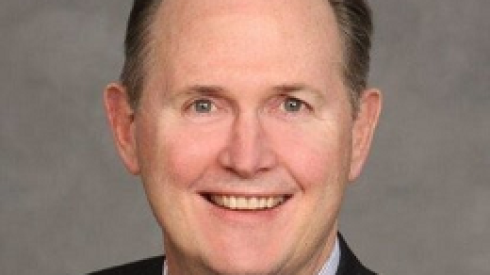
Mark Le Lievre (photo), directeur de la sélection de fonds d'UBS Wealth Management et ancien managing director de JP Morgan Wealth Mangement, vient de quitter son poste. Une information révélée par "Citywire Selector". Pour le moment, sa future destination n'est pas connue.
Selon les chiffres récoltés auprès de Morningstar, la multigestion en France à fin janvier 2018 atteint désormais 99,8 milliards d'euros en France contre 83,7 milliards d'euros fin 2016 et 97,6 milliards fin 2017.
p { margin-bottom: 0.1in; line-height: 115%; } The Italian asset management firm Krialos, a specialist in real estate, is aiming for a total of EUR5bn in assets within the next 12 months, Il Sole – 24 Ore reports. The firm now counts prestigious names among investors in its funds, such as York, Allianz, Kingstreet and Barings. It also has a mandate to invest on behalf of Blackstone in Italy.
p { margin-bottom: 0.1in; line-height: 115%; } The Canada Pension Plan Investment Board (CPPIB) is scoring double: the investment office for one of the largest Canadian pension funds has announced two major operations in the field of renewable energy. The institution on 2 April announced that it has signed an agreement to acquire a portfolio of six Canadian wind and solar energy operation projects from the NextEra Energy Partners company. The sale price is CAD741m. The portfolio includes four wind energy projects and two solar energy projects, with a total capacity of 396 megawatts, in Ontario. “The affiliates of NextEra Energy Partners, who have developed the portfolio and are currently operating it, will continue to act as operators,” the CPPIB says in a statement. Meanwhile, on 3 April, the CPPIB announced that it has invested an additional USD247m in ReNew Power Ventures, an independent clean energy producer in India. The Canadian pension fund had already invested USD144m in the Indian company in January 2018. With this new operation, “total investment by the CPPIB in ReNew Power is now USD391m,” the institution says in a statement. The new investment by the CPPIB will help to support the acquisition by ReNew Power of Ostro Energy Private Limited (Ostro Energy), a promoter of renewable energies in India, with a total capacity of 1,100 megawatts. With the acquisition of Ostro Energy, the capacity at ReNew Power will increase to over 5,600 megawatts, the CPPIB says.
p { margin-bottom: 0.1in; line-height: 115%; } The pension regime Ontario Teachers’ Pension Plan (OTPP) on 3 April announced that Bjarne Graven, its chief investment officer, has resigned after two years at the Canadian pension fund. Graven is planning «to return to Denmark to live with his family,” OTPP says in a statement. The resignation comes as the pension fund on 3 April announced that it was 105% capitalised as of 1 January 2018. “This is the fifth consecutive year that the regime has been fully capitalised, which highlights its financial health and its long-term viability,” the institution says. At the conclusion of the 2017 fiscal year, the pension fund had earned total net returns of 9.7%, bringing net assets to CAD189.5bn, “a tenfold increase since creation of the regime in 1990,” OTPP notes. Net investment proceeds total USD17bn as of the end of 2017, the pension fund says.
Solactive announced that it has completed the acquisition of Primervoto, its long-standing technology partner. The transaction was closed on the 29th of March 2018, and sees the full integration into Solactive AG of a team of 38 technology specialists, based in Berlin. «The Primervoto team has played a key part in Solactive’s success story as it has been instrumental to the delivery of highly scalable IT-solutions for real-time calculations of financial indices since 2010", said a press release. The financial terms of the transaction remain undisclosed.Solactive calculates today more than 5,500 indices for over 400 clients globally, with approximately USD 200 billion invested in financial products linked to its calculated indices, including 350 ETFs.
p { margin-bottom: 0.1in; line-height: 115%; } The quantitative asset management firm Sagara has announced the launch of its wealth management fund, Sagara Patrimonial. The objective for the fund is to generate annual returns in euros higher than those of the capitalised EONIA index plus 2.5%, while minimising correlation with the European equity markets, volatility of returns, and maximum drawdown. According to a statement by the asset management firm, founded in late 2017 (see NewsManagers of 2 November 2017), Sagara Patrimonial works in 11 asset clases (equities, bonds, gold, cash), and all aset classes are hedged against currency risks. It is not eligible for PEA and it has daily liquidity. The fund aims to achieve its objectives by combining two quantitative approaches: a management model inspired by so-called “risk parity” models, concentrating on risk allocation rather than on capital allocation, and a global module to manage the exposure of the fund to all of the various markets treated. The firm indicates that “the fund would be well-placed in a global portfolio allocation as an international flexible fund in euros, due to its virtue of decorrelation, and it can also be used for long-term cash management.”
The European Securities and Markets Authority (ESMA) is publishing the first Part of its Technical Advice (TA) under the Prospectus Regulation. The TA is published in response to a mandate from the European Commission (EC) of 28 February 2017, and has been developed following extensive consultation with the public through three Consultation Papers published on 6 July 2017. ESMA submitted the TA to the EC on 28 March 2018 in line with the deadline indicated in the mandate.The TA covers the areas of format and content of prospectus, the EU growth prospectus and the scrutiny and approval of prospectus. According to Steven Maijoor, Chair, of Esma : “The Prospectus Regulation, supporting the Capital Markets Union (CMU), aims to make it easier and cheaper for companies, and in particular smaller companies, to access capital and improve their prospectuses accessibility for investors. ESMA proposes a large number of simplifications and adaptations of the prospectus regime, aimed at maintaining a strong level of investor protection while also opening up new possibilities for companies to diversify their financing.”The advice takes as a starting point the existing prospectus regime, largely proposing to maintain what has proved to be a set of requirements that works well. ESMA sets out a number of changes aimed at easing requirements for issuers, with a view to reducing the cost and administrative burden in using a prospectus, as well as a number of additional disclosure requirements that are deemed necessary for investor protection.In addition, ESMA has developed the content of the new Universal Registration Document (URD), a new registration document for issuers of securities that are listed on a regulated market or an MTF. This URD is intended to function as a useful shelf registration document, allowing issuers to quickly offer securities to the market. In terms of secondary issuance, the technical advice proposes alleviated disclosure requirements by better taking into account already publicly available information.The EC sought technical advice on possible delegated acts to supplement certain elements of the new Prospectus Regulation. Subject to endorsement by the EC, the technical advice will form the basis for the delegated acts to be adopted by the EC by 21 January 2019.
p { margin-bottom: 0.1in; line-height: 115%; } Janus Henderson on 3 April announced that it has appointed Andrew McCarthy to its team dedicated to European equities. McCarthy will be based in London, and will officially begin in the role on 9 July 2018. He will work alongside John Bennett, director of European equity management, as co-manager of long-only European funds and mandates. McCarthy, who has 19 years of experience in asset management, joins from USS Investment Management, where he had been a portfolio manager specialised in the industrial and consumer sectors. He previously served at Capital International Research.
In February, Luxembourg-based collective investment organism posted net subscriptions of EUR16.9bn, the most recent statistics from the Luxembourg financial sector surveillance commission show. But due to a negative market effect of EUR43.7bn, assets fell 0.63% to EUR4.187trn.The number of collective investment organisms (OPC) in consideration is 4,017, compared with 4,030 the previous month. 2,583 entities have adopted a multiple sub-fund structure, representing 13,345 sub-funds. With the addition of 1,431 entities with traditional structure, a total of 14,776 funds are active in the market.
p { margin-bottom: 0.1in; line-height: 115%; } As the season of general shareholders’ meetings has begun, Ecofi Investissements has announced that it has “reinforced” its voting policy. In pay policy, the asset management firm will prefer companies which publish sufficiently detailed financial and extra-financial indicators on which variable pay is based. It is also asking for these remuneration policies to include social and environmental performance indicators. It takes a favourable view of remuneration policies which publish the pay ratio, between the highest and the median salary. Lastly, it requires that firms not increase salaries for appointed members of personnel in the case of significant layoff plans (solidarity principle). Concerning the dividend policy, Ecofi Investissements will oppose resolutions in which the dividends proposed are excessive with respect to the results achieved. “An unbalanced dividend policy (average of payout ratios over the past five years higher than 80%) can indicate a management philosophy which is too focused on the short term,” a statement explains. Lastly, Ecofi Investissements will oppose renewing the term for directors at companies who have been involved in severe controversy in the past term, except in case of public opposition from the director concerned.
p { margin-bottom: 0.1in; line-height: 115%; } As their development accelerates, Arkus and BeeAM, a French service company and partnerships dedicated to asset management firms, have teamed up to create the RSQUARE company. The structure is dedicated entirely to the production of market risk reporting indicators aimed at investors and asset management firms. By uniting “market ex ante” risk monitoring criteria (such as volatility, VaR, tracking error, leverage, liquidity, concentration, counterparty, etc.) which meet regulatory criteria, the structure will allow managers and directors to concentrate on analysis and not production, a statement explains. The solution is completely digital and makes it possible to outsource market risk reports, which meet both the requirements of securities management firms, and those of public or private asset classes.
Jean-Louis Scandella joined Ostrum Asset Management, an affiliate of Natixis Investment Managers, on 3 April 2018, as director of equity management (equity chief investment officer), a newly-created position. Scandella previously worked at Barings Asset Management in London, where he was director of equity management from 2014. He left the firm in 2016. He previously worked for Comgest as emerging market equity manager.At Ostrum AM (formerly Natixis Asset Management), Scandella will work to “reinforce competence in European and emerging market equity management and reposition the range to seek to deliver the best possible investment results for clients.” He will oversee equity management teams based in Paris and Singapore, composed of 27 experts, who currently manager over EUR23.6bn for retail institutional clients and external distributors.Scandella will report to Ibrahima Kobar, deputy CEO, director of management and member of the executive board at Ostrum Asset Management.
Solactive annonce la finalisation de l’acquisition de Primervoto, son partenaire technologique «de longue date». Ce sont 38 spécialistes de la technologie, basés à Berlin, qui ont rejoint le fournisseur d’indices. «L'équipe de Primervoto a joué un rôle clé dans la réussite de Solactive, car elle a joué un rôle déterminant dans la fourniture de solutions informatiques hautement évolutives pour le calcul en temps réel des indices financiers depuis 2010", explique un communiqué. Les conditions financières de la transaction restent confidentielles.Solactive revendique le calcul de plus de 5.500 indices pour plus de 400 clients dans le monde, avec environ 200 milliards de dollars investis dans des produits financiers liés à ses indices, dont 350 ETF.
Alors que la saison des assemblées générales vient de commencer, Ecofi Investissements annonce avoir « renforcé » sa politique de vote. En matière de politique de rémunération, la société de gestion va privilégier les entreprises qui publient de manière suffisamment détaillée les indicateurs financiers et extra-financiers sur lesquels reposent les rémunérations variables. Elle demande également à ce que les politiques de rémunérations intègrent des critères de performance sociale et environnementale. Elle juge favorablement les politiques de rémunérations qui publient le « pay ratio », soit le rapport entre le salaire le plus élevé et le salaire médian. Enfin, elle exige que les sociétés n’augmentent pas les salaires des mandataires sociaux en cas de plan de licenciement significatif (principe de solidarité). Concernant la politique des dividendes, Ecofi Investissements s’opposera aux résolutions quand les dividendes proposés seront excessifs au regard des résultats atteints. « Une politique de dividendes non équilibrée (moyenne des « pay-out ratio » des 5 dernières années supérieure à 80%) peut en effet signifier une philosophie de gestion trop focalisée sur le court terme », explique un communiqué. En vue de favoriser la diversité, la société de gestion examinera les propositions de nomination ou de renouvellement d’un administrateur au conseil d’administration, avec l’objectif d’atteindre un niveau de parité au moins égal à 30%. De plus, pour elle, les comités spécialisés doivent être composés au minimum par un tiers de membres indépendants. Enfin, Ecofi Investissements s’opposera au renouvellement d’un administrateur si la société a été impliquée dans des controverses très graves pendant le dernier mandat, sauf en cas d’opposition publique de l’administrateur concerné.
Groupama Asset Management (Groupama AM) enrichit encore sa gamme de fonds obligataires « Unconstrained » avec le lancement du fonds G Fund – Global Breakeven Inflation, a annoncé hier la société de gestion. Ce nouveau véhicule, co-géré par Nicolas Dubus et Laurent Pommier, est un compartiment de droit luxembourgeois de la sicav G Fund. Son objectif est de surperformer l’Eonia capitalisé « sur la durée de placement recommandée, grâce à une stratégie dynamique exploitant les anticipations d’inflation à l’échelle mondiale », souligne le gestionnaire d’actifs.Géré selon une approche « absolute return », le fonds vise plus précisément à « exploiter l’inefficience de la valorisation des anticipations d’inflation par les marchés », selon Groupama AM. « Ces inefficiences créent ainsi des opportunités de positionnement sur la classe d’actifs ‘inflation’, à la hausse comme à la baisse, et ce, y compris durant les phases de hausse de taux », ajoute la société.La gestion du G Fund – Global Breakeven Inflation, sans contrainte de benchmark, repose sur l’étude d’indicateurs fondamentaux, de valorisation et techniques qui « permettent l’identification de stratégies porteuses et créatrices de valeur dans l’univers de la dette souveraine mondiale », indique Groupama AM. Son univers d’investissement comprend majoritairement les émetteurs souverains de pays développés et, dans une moindre mesure, de pays émergents ainsi que le marché des devises. L’équipe de gestion utilise toutes les sources de performance relatives à la thématique inflation, en intégrant notamment des stratégies sur les obligations indexées sur l’inflation, de swaps d’inflation, des arbitrages de courbes ou de maturités, et d’allocation géographique.
La Banque Postale Asset Management (LBPAM) doit annoncer, ce 4 avril, la labellisation ISR de 7 nouveaux fonds actions, taux, crédit et multi-actifs après les 11 fonds déjà labellisés en septembre 2017. Les 7 fonds concernés sont : Fédéris ISR Actions US, Fédéris ISR Crédit, Fédéris Trésorerie, LBPAM Actions Entreprises, LBPAM IRC Actions Euro Min Var, LBPAM Multi Actifs ISR et, enfin, LBPAM Taux ISR. « LBPAM innove en faisant labéliser un fonds d’allocation multi-actifs et complète ainsi son dispositif de labellisation couvrant toutes les classes d’actifs », commente Daniel Roy, président du directoire du LBPAM.Engagée depuis plus de 20 ans dans la gestion responsable, la société affiche un encours ISR de 109 milliards d’euros, soit 50% des encours globaux à fin décembre 2017. LBPAM dispose également d’un outil propriétaire de notation ISR, baptisé AGIR, qui couvre plus de 4.500 émetteurs et leur attribue une note ISR selon quatre axes d’analyse : la gouvernance responsable, la gestion durable des ressources, la transition économique et énergétique et, enfin, le développement des territoires.