Le gestionnaire d’actifs écossais Baillie Gifford a annoncé, ce 10 janvier, les nominations de Lesley Dunn en tant que cogérante du fonds Baillie Gifford Corporate Bond et de Lucy Isles comme cogérante du fonds Baillie Gifford High Yield Bond.Lesley Dunn travaillera aux côtés de Torcail Stewart et Stephen Rodger pour assurer la gestion du fonds Corporate Bond, dont les encours s’élèvent à 727 millions de livres. L’intéressée, qui compte plus de 16 ans d’expérience, a intégré Baillie Gifford en 2016 en provenance d’Aberdeen Asset Management.Pour sa part, Lucy Isles travaillera aux côtés de Robert Baltzer pour gérer le fonds High Yield Bond, qui affiche 458 millions de livres d’actifs. Elle a rejoint Baillie Gifford en 2012 à sa sortie de l’Université de St Andrews et est devenue « investment manager » dans l’équipe high yield en 2015.
Liontrust a recruté Donald Phillips pour compléter sa nouvelle équipe obligataire mondiale. L’intéressé, qui rejoindra la société de gestion en février 2018, est actuellement gérant au sein de l’équipe crédit de Baillie Gifford. Précédemment, entre 2005 et 2008, il officiait chez Kames Capital où il a travaillé avec David Roberts et Phil Milburn qu’il va retrouver chez Liontrust au sein de l’équipe obligataire. Le duo doit en effet rejoindre Liontrust ce mois-ci. Donald Phillips est co-gérant du fonds Baillie Gifford High Yield Bond Fund depuis juin 2010 et de la stratégie US High Yield depuis son lancement en février 2017. David Roberts est quant à lui responsable de l’équipe obligataire au sein de Kames Capital et Phil Milburn est responsable de la stratégie d’investissement de l’équipe.Liontrust va profiter de l’arrivée de ce trio pour lancer trois fonds : Strategic Bond, High Yield Bond et Absolute Return Bond.
p { margin-bottom: 0.1in; line-height: 120%; } As announced a few months ago, in the wake of Brexit, M&G Investments has announced that it has begun the process of transferring assets from four open-ended funds domiciled in the United Kingdom, with total valuation of EUR10.4bn, to equivalent funds on its Luxembourg platform. The four funds are distributed exclusively to clients domiciled outside the United Kingdom, and the transfer of their assets will be subject to shareholder approval, the asset management firm says. The four funds concerned in the transfer are: M&G European Inflation Linked Corporate Bond Fund, M&G Dynamic Allocation Fund, M&G Income Allocation Fund and M&G Prudent Allocation Fund. Their assets will be merged into the following respective funds: M&G (Lux) European Inflation Linked Corporate Bond Fund, M&G (Lux) Dynamic Allocation, M&G (Lux) Income Allocation and M&G (Lux) Conservative Allocation. “Following the decision by referendum in the United Kingdom to withdraw from the European Union, M&G has taken several precautionary measures to protect the interests of their international clients,” says Anne Richards, CEO of M&G. “These measures, which range from reinforcements to our SICAV product range to the creation of a legal entity in Luxembourg, will allow us to ensure our international clients access to investment strategies whatever the final agreement is between the United Kingdom and the rest of Europe,” she adds. From a practical standpoint, official notice of the offer was sent to shareholders in the fund on 10 January. Shareholders have a period of four weeks starting from that date to decide. The outcome of their vote will be announced at an extraordinary general shareholders’ meeting to be held on 9 February 2018. If they decide in favour of the transfer, the four funds will be merged on 16 March 2018. Ahead of the vote, the M&G (Lux) Dynamic Allocation, M&G (Lux) Income Allocation and M&G (Lux) Conservative Allocation funds will be launched on 16 January 2018, at the demand of clients, while the M&G (Lux) European Inflation Linked Corporate Bond fund will be made available only once a merger is completed. The four Luxembourg SICAV funds will apply strategies identical to those of the current United Kingdom-domiciled funds, and will be overseen by the same managers. The Luxembourg Commission de Surveillance du Secteur Financier (CSSF) and the British Financial Conduct Authority (FCA) have already granted permission to the proposals of M&G. M&G announced plans very early to launch a new range of Luxembourg-registered SICAV funds by March 2019. This will be composed of funds which will aim to adopt similar investment strategies to those of existing British M&G funds, and which will be open to European investors. M&G is also putting in place a new legal entity in Luxembourg, composed of two bodies: one licensed asset management firm under the OPCVM (UCITS) and the Alternative Investment Fund Manager (AIFM) directives, and one company dedicated to distribution of funds and services from the Luxembourg-registered asset management firm.
p { margin-bottom: 0.1in; line-height: 120%; } The Spanish banking group Santander has launched Santander Orienta, a new digital fund advising platform aimed at clients of its retail bank, the website Cinco Dias reports. The objective is to assist clients of the bank who wish to buy and invest in mutual funds. The tool will assist clients in their investment decisions, by giving them access to an adequate range of products appropriate to their needs and expectations. The funds will be offered for the appropriate risk and investment profile for each client, based on a profile including information about age, investment objectives, investment horizon and the level of risk they are prepared to take on. The Spanish bank will mostly offer its own funds through this tool. However, Santander Private Banking, the private banking division of the group, may offer funds from other asset management firms. In total, the platform will offer more than 180 national and international portfolios from over 350 managers, mostly to high net worth clients.
p { margin-bottom: 0.1in; line-height: 120%; } The Norwegian sovereign fund would like to be allowed to invest in companies not listed on the stock market, a document released on Wednesday says, AFP reports. The fund, created to manage Norwegian public oil revenues to finance its generous welfare state, is currently invested in equities (65.9% of its portfolio), bonds (31.6%), and real estate (2.5%). In a letter to the finance minister, the fund recommends investing in companies not listed on the stock exchange, noting that historical data suggests returns may be “slightly higher” than for listed companies. The number of companies listed appears to have been declining in recent years, it notes, citing a decline of nearly 50% in the number of United States companies listed since 1996. In practice, the bank has recommended starting by investing in, or alongside private placement funds. The finance minister will now consider the recommendation and submit a proposal to Parliament, which will make a final decision, the news agency reports.
ETFGI, an independent research and consultancy firm on trends in the global ETF/ETP ecosystem, reported that assets invested in ETFs and ETPs listed in Europe increased by 40.1% during 2017 to reach a new high of US$802.38 Bn at the end of December. According to ETFGI’s December 2017 European ETF and ETP industry insights report, an annual paid-for research subscription service, assets invested in European-listed ETFs/ETPs grew by a record US$229.76 Bn during 2017, over double the previous record of US$67.00 Bn set in 2016. The increase of 40.1%, from US$572.62 Bn at the end of 2016, also represents the greatest growth in assets since 2009 when markets recovered following the 2008 financial crisis.This record was achieved on the eve of another milestone for the ETF industry: the 25th anniversary of the listing of the first ETF in the US, the venerable SPDR S&P 500 ETF (SPY US), on 22nd January 1993. At the end of 2017, SPY on its own accounted for assets of US$271.39 Bn.During 2017 ETFs/ETPs listed in Europe saw record net inflows of US$108.28 Bn; 94.4% more than net inflows for 2016, and over double the average for net inflows over the previous 5 years. December 2017 also marked the 38th consecutive month of net inflows into Euopean-listed ETFs/ETPs, with US$1.63 Bn gathered during the month.The majority of these flows can be attributed to the top 20 ETFs by net new assets, which collectively gathered US$33.60 Bn during 2017. The iShares J.P. Morgan EM Local Govt Bond UCITS ETF (SEML LN) on its own accounted for net inflows of US$2.93 Bn.
After a tough year in 2016, a very good year in 2017. Lazard Frères Gestion last year posted net inflows of EUR1.6bn, François-Marc Durand, chairman of the asset management firm, announced on 10 January at a presentation of outlooks for 2018. The breakdown of inflows has been characterised by a rise in distribution, with EUR500m from France, while distribution in Europe also brought in EUR500m, and institutional clients brought in EUR500m altogether. Private banking also registered strong inflows.There are now three “blockbuster” strategies, which have about EUR1bn each. These global convertible strategies represent EUR1.5bn, while small caps account for EUR1bn, and financial debt strategies also have EUR1bn. Lazard Patrimoine, which earned returns of 6.6% last year, and which now has a three-year performance track record, will next week be the subject of a promotional campaign. The campaign will target clients whose life insurance polices show constant and current downward orientations to performance.François-Marc Durand has also mentioned concerns at the company with respect to the impact of the MiFID II directive on strategy. He cited the example of the Large Caps strategy, which now has a ten-year record of outperforming the Eurostoxx index, by 390 basis points per year. To put this outperformance clearly on the record, Lazard Frères Gestion has applied for GIPS certification. But the asset management firm also had to decline a number of mandates for institutional clients, since the associated fees would have to be determined on the basis of performance. And at Lazard there is no question of absorbing research costs either. “We ensure that a fair price is paid and we will not agree to bear these costs at our expense,” says Durand.The asset management firm has had to undertake some consideration of the price of performance. “This is not corporate combativeness. This is a more general line of reflection about the price/performance relationship. There needs to be a price which is appropriate to the performance. The price needs to be tied to performance, to the persistence of performance over time. This issue needs to be considered,” says Durand, who plans to further comment on the topic in the coming months.
p { margin-bottom: 0.1in; line-height: 120%; } Alexandre Caminade is climbing the ranks at La Banque Postale Asset Management (LBPAM). According to his LinkedIn profile, the Allianz Global Investors veteran has since January 2018 been serving as head of fixed income, insurance solutions, credit and convertible bonds. Caminade joined LBPAM in August 2017 as head of credit management (see NewsManagers of 18 September 2017). In that role, he oversaw a team of eight people and EUR14bn in assets under management. In his new position he now oversees 17 people and EUR170nb in assets under management. Caminade has taken over the responsibilities previously held by Iain Bremner, who had been head of bonds and credit since May 2016. According to Citywire Selector, which broke the story, Bremner will now oversee research teams covering macro, credit, equities, socially responsible investment (SRI) and quantitative management, which activities were grouped together on 1 January 2018.
In a series of tests conducted in late 2017, BNP Paribas Asset Management (“BNPP AM”) has announced that it has successfully completed its first transaction to subscribe to a fund using blockchain technologies throughout the transaction chain. The test was carried out using the blockchain programme at BNP Paribas Securities Services, Fund Link, and FundsDLT, a decentralised platform which uses blockchain to process subscription and redemption operations for fund shares. FundsDLT is a joint initiative of FundSquare (an affiliate of the Luxembourg stock exchange), InTech (an affiliate of the POST Group) and KPMG Luxembourg.The test confirms the ability of platforms to make a link between various blockchains and is the first to rely on interoperability of independent blockchains. This also marks a key step in fund distribution. The transaction covered every part of the process, from the order instruction up to the execution of the operation. “BNPP AM thus becomes one of the first major international asset management firms to complete a test subscription to funds via blockchain technology. This new development falls fully in line with its growth plan, which places innovation and technology at the heart of strategy. This allows it to strengthen its position as a top provider of digital investment solutions for fund distribution,” a statement says.
Le gérant d’actifs suisse Partners Group a clôturé l’année 2017 avec des actifs sous gestion de 61,9 milliards d’euros au 31 décembre, en hausse de 14,2% par rapport à l’année précédente. C’est 3% au-dessus du consensus des analystes, grâce à des ventes brutes bien plus élevées que prévues, relèvent les analystes de Morgan Stanley dans une note. Partners Group a investi 13,3 milliards d’euros pour le compte de ses clients en 2017, alors qu’il prévoyait une fourchette de 10 à 12 milliards. Il prévoit une fourchette de 11 à 14 milliards d’euros en 2018.
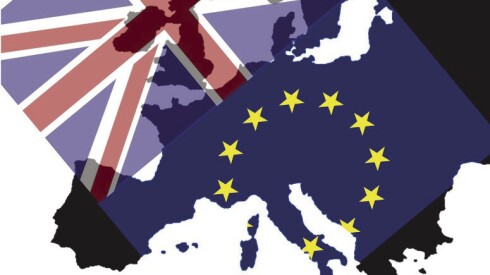
Cela pourrait coûter également une perte en investissements de 50 milliards de livres (56 milliards d'euros) sur douze ans, estime un rapport commandé par le maire de Londres, Sadiq Khan.
Avez-vous vos noisettes ? Une crypto-monnaie utilisée comme outil d’échange sur le site mytroc.fr qui va bientôt voyager à l’aide d’une Blockchain. La noisette est une « monnaie » « équitable, solidaire et écologique », nous disent ses promoteurs. Elle n’a nulle vocation pour la spéculation et n’a aucun plafond à son développement. Tout le contraire du bitcoin, en sorte ! Elle est utilisée pour du troc solidaire, créer du lien social et lutter contre la pauvreté. Mieux que tout, c’est une monnaie gratuite…
Offres d’emploi. La Réserve fédérale américaine n’est pas la seule banque centrale à connaître un mouvement de personnel important. Dans les deux ans à venir, la Banque centrale européenne (BCE) connaîtra elle aussi des changements au sommet. Pas moins de cinq personnalités quitteront la banque centrale. Le premier sera le Portugais Vitor Constâncio, 74 ans, membre du directoire et vice-président de l’institution, dont le remplaçant prendra ses fonctions en juin. Pour lui succéder, le gouvernement espagnol pousse son actuel ministre des Finances, Luis de Guindos, un ancien de Lehman Brothers. L’Espagne n’a plus actuellement de représentant à très haut niveau au sein de la BCE. Le processus de désignation par l’Eurogroupe doit commencer dans les prochains jours. Fin 2018, Danielle Nouy, présidente du Conseil de supervision bancaire au sein de la BCE, laissera sa place. Tout comme le mandat du chef économiste de l’institution Peter Praet à échéance juin 2019, puis celui du président Mario Draghi en octobre 2019. Enfin, le mandat de Benoît Coeuré, responsable des opérations de marché, se terminera avec la nouvelle année 2020. Si le président de la Bundesbank, Jens Weidmann, 49 ans, est donné aujourd’hui favori pour succéder à Mario Draghi, il reste à suivre des procédures. Les parlementaires européens ont pour habitude de procéder sur la base d’une short list d’au moins trois noms incluant des femmes. La nationalité ne sera pas le seul critère de désignation, indique l’agence Bloomberg. Etre une femme sera un atout important et être une personnalité du monde politique romprait avec la tradition des technocrates et des banquiers. Quoi qu’il en soit, les nouveaux venus auront à assurer dans les conditions les meilleures la sortie de la politique de quantitative easing. Une charge délicate, même si, à la fin, les décisions de la BCE sont collégiales et se prennent par consensus.
Les classements 2017 amLeague font ressortir « une meilleure performance globale face aux benchmarks que les années précédentes, cela dans presque toutes les catégories », salue Antoine Briant, directeur général d’amLeague. Les tableaux ci-contre présentent uniquement les fonds ayant battu leur référence.
La crise n’est plus ce qu’elle était. Même pour les pays les plus touchés. En passant sous les 4 % pour le Nouvel An, puis en refluant vers les 3,60 % les jours suivants, le rendement du souverain grec à 10 ans retrouve son niveau de fin 2005. Effacés les cauchemars des crédits subprime, la faillite de Lehman Brothers et les turbulences sur les « périphériques » de la zone euro. La crise devient par touches successives un mauvais rêve. Faut-il l’oublier pour autant ?
« Spread ». Les prix de l’immobilier et l’indice S&P 500 ont beau se situer à des plus hauts et le taux de chômage toucher un plus bas depuis 2000 aux Etats-Unis, plus de 30 % des familles américaines disposent d’un patrimoine financier nul ou négatif, soit le pourcentage le plus élevé depuis les années 1960, indique une étude étoffée de Deutsche Bank*, pour qui les inégalités n’ont jamais été aussi importantes depuis qu’elles se sont développées au milieu des années 1980. Le top 0,1 % des foyers détient autant d’actifs que le plancher des 90 % et, dans la plupart des Etats, de 10 % à 20 % des ménages ont recours aux tickets alimentaires. Parfois, la moyenne peut monter jusqu’à 30 %. Cette situation sociale, combinée à la montée du populisme qui lui est associée, pourrait, dans les années à venir, devenir le thème le plus important pour les investisseurs sur les marchés actions américaines, des changes et du fixed income, expliquent les économistes de la banque.
Les salariés de l’industrie allemande du syndicat IG Metall ont entamé la nouvelle année par une série de débrayages dans les usines Porsche, Otis, du groupe Thyssenkrupp et de quelques autres. Pour des motifs de revendications salariales et de réduction du temps de travail. Au nom des 3,9 millions de salariés de l’industrie, ils réclament des augmentations de 6 % quand le patronat du secteur consent à des hausses de 2 %. Il est vrai qu’outre-Rhin, le chômage est au plus bas et l’économie affiche une santé éclatante. Il ne manque guère qu’un gouvernement. Et puis quoi… des hausses de salaires permettraient peut-être de secouer les puces à l’inflation. Qui l’eût cru ? Des salariés en grève, alliés objectifs de la Banque centrale européenne et de son objectif d’inflation.
Légende. Un gourou de la finance tire sa révérence. Après plus de 30 ans de bons et loyaux services auprès de Franklin Templeton Investments, Mark Mobius (photo), grand spécialiste des marchés émergents pendant plus de 40 ans, prendra sa retraite le 31 janvier prochain. Président exécutif de Templeton Emerging Markets Group, l’homme qui a fêté ses 81 ans l’an passé, a rejoint Templeton en 1987, alors recruté par Sir John Templeton. Objectif : lancer l’un des premiers fonds d’investissement consacrés aux pays émergents et prendre les brides du département dédié. Début 2016, Mark Mobius passe peu à peu la main à Stephen Dover et confie la gestion de ses fonds à d’autres membres de la structure. A fin septembre 2017, Templeton Emerging Markets Group comptait 28 milliards de dollars sous gestion.
En ces temps d’intensification du London fog pour cause d’impact incertain du Brexit, l’économie britannique peut compter sur le soutien de la famille royale. Plus précisément sur le mariage prévu le 19 mai prochain du Prince Harry et de l’actrice américaine Meghan Markle. Qui pourrait, selon le cabinet Brand Finance, rapporter 500 millions de livres (560 millions d’euros environ) : 200 millions pour le tourisme dont l’hôtellerie et les transports, 150 millions pour les fêtes et célébrations, 50 millions pour les objets commémoratifs, sans oublier l’équivalent de 100 millions de livres de publicité gratuite pour le royaume dans le monde. Le prochain coup de pouce royal sera peut-être celui du mariage du Prince George, arrière-petit fils de la reine. Mais le fils de William n’a encore que 4 ans…
L’Autorité des marchés financiers (AMF) a renouvelé ses mises en garde aux épargnants contre les investissements en bitcoin, après que l’ancienne candidate de téléréalité Nabilla Benattia a encouragé ses admirateurs à investir dans cette cybermonnaie. «C’est vraiment sûr, c’est vraiment cool et si ça vous intéresse vraiment vous pouvez y aller les yeux fermés», déclare-t-elle dans une vidéo d’un peu plus de trois minutes publiée sur Snapchat. Les autorités financières -qu’il s’agisse de l’AMF ou du gouverneur de la Banque de France- ainsi que le gouvernement ont multiplié en fin d’année les avertissements contre les investissements en bitcoin, sur fond de flambée de sa valeur.
A l'occasion de sa participation aux Coupoles Distrib Invest 2018, Nicolas Marquot, président et fondateur de 1854 Patrimoine détaille pour la rédaction la stratégie de son cabinet en matière d'éducation financière et de communication digitale.
Lors d'une phase de test effectuée fin 2017, BNP Paribas Asset Management (BNPP AM) a réalisé avec succès sa première transaction de souscription dans un fonds en utilisant la technologie blockchain tout au long de la chaîne de transaction.
Claudio Arenas-Sanguineti , président de la société de gestion Vestathena, à l’occasion d’un rendez-vous avec la presse ce 8 janvier 2018, a annoncé une évolution de son actionnariat au cours de l’année 2017. Ainsi, « Monceau Assurances n’est plus actionnaire de la société, a-t-il dévoilé. Monceau Assurances est sorti du capital au deuxième semestre 2017. » La compagnie d’assurance avait soutenu le lancement de Vestathena en juin 2014 en prenant 15% du capital. Une participation que Monceau Assurances a donc intégralement cédé l’an dernier. Trois ans après sa création, Vestathena poursuit sa dynamique de croissance. Au cours de l’exercice 2017, la société de gestion indépendante spécialisée sur les actions européennes a en effet enregistré une collecte de 42 millions d’euros. A fin 2017, ses actifs sous gestion s'établissaient à 269 millions d’euros. « Nos encours sont en légère hausse puisque nous avons débuté l’année à environ 250 millions d’euros », a précisé Claudio Arenas-Sanguineti. forthcoming associé fondateur de La Française des Placements puis de la Financière de la Cité, le dirigeant reconnaît être freiné dans son développement par « la taille de nos fonds ». « Nous sommes très ambitieux et nous voulons grandir car la taille des fonds est le reflet de la confiance de nos clients, a-t-il expliqué. Or la plupart des institutionnels ont des critères de minimum d’encours pour investir. » A ce stade, « un seul de nos fonds avoisine les 100 millions d’euros », a observé Claudio Arenas-Sanguineti. « Mais nous sommes patients et persévérants », a-t-il ajouté. Dans ce contexte, le dirigeant n’a pas caché que son objectif principal pour 2018 est d’accroître « les encours, avec des actions centrées sur la partie commerciale », a-t-il dévoilé.